

What’s the difference between sampled and full EICR testing?
Sampled versus Full EICR testing
Understanding what gets inspected, why sampling is sometimes used, and how to make sure you're getting the right electrical inspection for your property.
When arranging an Electrical Installation Condition Report (EICR), you may come across the terms sampled testing and full testing. But what do they actually mean, and does one provide a better assessment of electrical safety than the other? It's an important distinction, particularly for landlords, commercial property owners and anyone responsible for maintaining a larger electrical installation. At LAIRD Electrical Contractors, we believe customers should understand exactly what they're paying for. That includes knowing what will be inspected, how much testing is involved and whether any parts of the installation will be excluded. Let's explain the differences.
First, what is an EICR?
An Electrical Installation Condition Report is a formal assessment of the condition of an existing fixed electrical installation. It involves inspection and testing to identify electrical defects, deterioration and potential safety hazards that could affect the continued safe use of a property. Depending on the installation, an EICR may assess:
- Consumer units and distribution boards
- Electrical circuits and fixed wiring
- Earthing and protective bonding arrangements
- Protective devices, including circuit breakers and RCDs
- Sockets, switches and other accessible electrical accessories
- The results of appropriate electrical tests
The findings are recorded in a report, together with any observations, limitations and an overall assessment of the installation's condition. However, an EICR doesn't necessarily involve dismantling and testing every individual electrical accessory in a building. That's where sampling comes in.
What is sampled EICR testing?
Sampled EICR testing involves inspecting an agreed, representative selection of parts of an electrical installation rather than examining every individual item in the same depth. For example, a large commercial building might contain hundreds of sockets, lighting points and electrical accessories. Inspecting every single accessory could require considerable time, access arrangements and disruption. Where appropriate, an electrician may agree a representative sample for detailed inspection. The sample might include accessories from different areas, circuits, installation types or environments, taking account of their condition and use. Importantly, sampling doesn't mean an electrician simply checks a few sockets and assumes everything else is safe. A properly planned EICR still requires an appropriate assessment of the installation, including relevant electrical testing. The extent of sampling must be suitable for the property and clearly recorded.
Why might sampling be appropriate?
Sampling can be useful where an installation is extensive, reasonably consistent in construction and has a suitable maintenance and inspection history. It can help reduce unnecessary dismantling and disruption while providing meaningful information about the installation's condition. However, sampling must be justified. If defects are discovered, the electrician may need to expand the inspection to establish whether similar problems exist elsewhere. Sampling should never be used simply to reduce the price at the expense of an adequate safety assessment.
What is full EICR testing?
The term full EICR testing is commonly used to describe a more comprehensive inspection and testing arrangement, potentially covering all accessible circuits and a greater proportion, or all, of the relevant electrical accessories. However, it's important to understand that “full testing” isn't a universal promise that every concealed cable, connection or component will be physically examined. Even a comprehensive EICR may have practical limitations. For example, wiring concealed within walls, inaccessible connections or equipment that cannot safely be isolated may not be available for direct examination. The scope should therefore be agreed before the inspection begins, with any limitations properly documented.
When might a more comprehensive inspection be advisable?
A wider inspection may be appropriate when:
- The electrical installation is particularly old or its condition is unknown.
- Previous electrical reports are unavailable or incomplete.
- There is evidence of poor workmanship, deterioration or repeated faults.
- The property has undergone significant alterations.
- Initial sampling identifies defects that could affect other parts of the installation.
- The property is being purchased, refurbished or brought back into use following a prolonged period of inactivity.
The decision should be based on the installation and the risks involved, not simply whether the customer wants the cheapest or most expensive inspection.
Sampled vs full EICR testing: what's the difference?
| Sampled EICR inspection | More comprehensive EICR inspection | |
|---|---|---|
| Inspection coverage | Agreed representative selection | Wider coverage, potentially all accessible relevant items |
| Electrical testing | Appropriate tests within the agreed scope | More extensive testing where required |
| Time required | May reduce inspection time | Generally requires more time |
| Disruption | Potentially less dismantling and interruption | May require greater access and isolation |
| Cost | May be lower depending on scope | May cost more due to additional work |
| Suitability | Where representative sampling is justified | Where greater coverage is necessary or requested |
| Reporting | Sampling extent and limitations recorded | Scope and any remaining limitations recorded |
Neither approach should be chosen purely on price. What matters is whether the inspection provides an appropriate assessment of the particular electrical installation.
Does sampled testing mean some electrical faults could be missed?
Yes. Sampling involves examining a selection rather than every relevant item, so defects outside the inspected sample may remain undetected. But it's also important to recognise that no EICR can guarantee the discovery of every possible defect. An EICR is an assessment of the installation's condition at the time of inspection, within its agreed scope and recorded limitations. That's why the electrician's judgement, the installation's history and the findings during testing are so important. If a sampled inspection reveals recurring problems, damaged accessories or evidence of poor installation practices, extending the sample may be necessary. A representative sample should not be treated as adequate simply because the originally agreed number of items has been inspected.
Is sampled EICR testing acceptable for commercial properties?
Sampling can be appropriate for commercial installations, provided the extent of inspection and testing is justified and suitable for the circumstances. Commercial buildings often contain extensive electrical installations, with different distribution boards, circuit types, operating environments and access requirements. For example, an office building may have relatively consistent socket installations across several floors, but also contain plant rooms, kitchens, external equipment and other areas with different electrical risks. A sensible inspection strategy needs to account for these differences. The scope may also be influenced by previous inspection results, maintenance records, installation age, operational restrictions and any specific duty holder requirements.
Commercial property owners and employers have duties under the Electricity at Work Regulations 1989 to maintain electrical systems so as to prevent danger, so far as reasonably practicable. An EICR can form an important part of an electrical maintenance programme, but it does not replace ongoing maintenance or the duty to address known hazards.
What about EICRs for landlords?
For rented properties in England covered by the electrical safety regulations, landlords must arrange electrical inspection and testing at the required intervals and comply with the associated reporting and remedial obligations. However, the regulations should not be interpreted as giving landlords a blanket choice to commission a minimal sampled inspection simply because it is cheaper. The inspection must be appropriate for the installation and carried out by a suitably qualified and competent person.
For a typical house or flat, the electrical installation may be relatively modest, making a comprehensive inspection more practical than in a large commercial building. The electrician should determine the appropriate scope and record any agreed limitations. A low-cost inspection is of little value if its scope is inadequate for the property or its intended purpose.
Why do EICR quotations sometimes vary so much?
You might receive two very different quotations for what appears to be the same electrical safety inspection. There can be several reasons. One electrician may have allowed for a more extensive inspection, additional circuit testing or more time on site. Another quotation might include a limited inspection scope, assumptions about access or exclusions that aren't immediately obvious.
Property size, circuit numbers, distribution boards, previous records and the ability to isolate electrical equipment can all influence the cost. Before accepting an EICR quotation, it's worth asking:
- What is included in the inspection and testing?
- Will sampling be used, and if so, to what extent?
- Are any limitations or exclusions anticipated?
- Will the report identify the scope and limitations clearly?
- What happens if defects are discovered that require further investigation?
A clear quotation should help you understand what you're buying, rather than leaving you to compare prices without knowing what's included.
Does an EICR include repairs?
Not normally. An EICR is an inspection and reporting service, rather than an agreement to repair every defect discovered. If problems are identified, they will be recorded and classified as appropriate. You can then arrange the necessary remedial electrical work or further investigation. Some defects may require urgent attention, while others may be recommendations for improvement. At LAIRD Electrical Contractors, we can explain the findings and discuss suitable remedial work where required. An unsatisfactory EICR doesn't automatically mean the property needs a complete rewire. Often, specific defects can be addressed through targeted repairs.
So, which type of EICR testing is right for your property?
There isn't one approach that suits every installation. A small domestic property, a large warehouse, a multi-storey office and an older commercial building may all require different inspection arrangements. The most important consideration is that the inspection scope is appropriate for the installation's condition, complexity, use and associated risks. Sampling can be a legitimate part of a professionally planned inspection, but it needs to be justified and documented.
A more comprehensive inspection may provide greater coverage, particularly where the installation's condition is uncertain or previous defects have been identified. Ultimately, the decision should be guided by electrical safety, not simply the lowest quotation.
Electrical inspection and testing with LAIRD Electrical Contractors
At LAIRD Electrical Contractors, we provide electrical inspection and testing services for homeowners, landlords and commercial properties across Leeds and Yorkshire. We believe in straightforward advice, competitive pricing and clear quotations.
Before carrying out an EICR, we can discuss your property's requirements, the proposed scope of inspection and testing, and any practical considerations that could affect the work. Our aim is to help you understand the condition of your electrical installation and what action, if any, may be required.
Need an EICR for your home, rental property or commercial premises? Contact LAIRD Electrical Contractors to discuss your requirements and request a competitive quotation for electrical inspection and testing.
Need an EICR? Make sure you're getting the right electrical inspection.
Not all electrical inspections involve the same level of testing, and understanding what's included is important when it comes to the safety of your property. At LAIRD Electrical Contractors, we provide professional Electrical Installation Condition Reports (EICRs) for homeowners, landlords and commercial property owners across Leeds and Yorkshire. Whether you need an inspection for your home, rental property or business premises, we'll help you understand the appropriate scope of testing and what's involved.
With competitive pricing, clear quotations and straightforward advice, you can have confidence that your electrical inspection is being carried out professionally. We'll explain what will be inspected, any limitations and what the findings mean for your property, including any remedial work that may be required.
Contact LAIRD Electrical Contractors today to discuss your EICR requirements, arrange an electrical inspection or request a competitive quotation.
Call 0113 4180 697 or tell us about your property and electrical inspection requirements.

What is an EICR and why is it important?
Electrical safety is an essential part of maintaining any property, whether it's your family home, a rental property or commercial premises. But how do you know if your electrical installation is safe and in good condition? One of the most effective ways to assess the condition of your property's electrics is through an Electrical Installation Condition Report, commonly known as an EICR. In this guide, we explain what an EICR is, what electricians check, how often inspections may be needed and what happens if problems are identified.
What is an EICR?
An Electrical Installation Condition Report (EICR) is a formal report produced following an inspection and testing of an existing electrical installation. The purpose of an EICR is to assess the condition of electrical wiring, circuits, consumer units or distribution boards, and associated electrical equipment forming part of the fixed installation. It helps identify deterioration, damage, defects and potential electrical hazards that may require attention. An EICR is sometimes referred to as a fixed wire test or electrical safety inspection, particularly in commercial properties.
What does an EICR inspection involve?
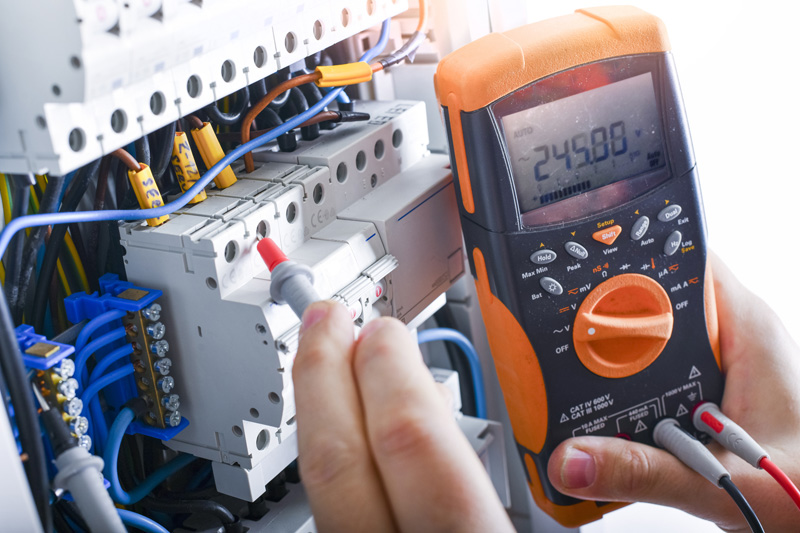
During an EICR inspection, a qualified electrician examines and tests relevant parts of the property's fixed electrical installation. Depending on the installation and agreed inspection scope, this may include:
- Consumer units, fuse boards and distribution boards
- Electrical wiring and circuits
- Sockets, switches and electrical accessories
- Earthing and bonding arrangements
- Circuit breakers and protective devices
- Residual current devices (RCDs)
- Electrical connections and signs of deterioration
- Insulation resistance, continuity and other electrical tests
The electrician will also assess whether the installation presents potential safety risks. Some testing requires electrical circuits to be temporarily isolated, so it's important to plan access and any necessary interruptions beforehand.
What do EICR codes mean?
If an electrician identifies an issue during the inspection, it will be recorded using an observation code. The main EICR classification codes are:
- C1 – Danger present: an immediate risk of injury exists, and immediate action is required to make the installation safe.
- C2 – Potentially dangerous: a defect presents a potential danger, and urgent remedial action is required.
- C3 – Improvement recommended: a improvement is recommended, although the observation does not, by itself, make the report unsatisfactory.
- FI – Further investigation required: further investigation is needed without delay because a potentially dangerous condition may exist.
An EICR will normally be classified as unsatisfactory if it contains C1, C2 or FI observations.
How often should you have an EICR?
The recommended frequency depends on the property, how it is used, the condition of the installation and any relevant legal requirements.
- Homeowners: for owner-occupied homes, an EICR is commonly recommended at intervals of no more than ten years, although earlier inspection may be appropriate depending on the property's condition. It's also worth considering an electrical inspection when purchasing an older property, planning major renovations or experiencing recurring electrical problems.
- Landlords and rental properties: in England, private landlords are generally required to arrange inspection and testing of electrical installations at least every five years, or sooner where the applicable report specifies a shorter interval. Landlords must also comply with the relevant requirements for providing reports and addressing identified defects.
- Commercial properties: for many commercial premises, five years is a commonly recommended initial maximum interval for periodic inspection, although the appropriate frequency varies. Offices, shops, warehouses, workshops and industrial premises can have different electrical risks and operating conditions.
The Electricity at Work Regulations 1989 require electrical systems to be maintained to prevent danger, so far as reasonably practicable. An EICR can form an important part of managing those responsibilities. There is no single statutory five-year EICR requirement applying to every commercial property.
Is an EICR a legal requirement?
Whether an EICR is legally required depends on the type of property and applicable regulations. For private rented homes in England, electrical safety legislation establishes specific inspection and testing duties. For owner-occupied homes, there is generally no universal legal requirement to obtain an EICR every ten years. Businesses and employers have duties to maintain electrical systems safely, and periodic inspection and testing can help demonstrate that electrical risks are being appropriately managed. An EICR is therefore an important safety document, but its legal status and required frequency depend on the circumstances.
What happens if your EICR is unsatisfactory?
An unsatisfactory EICR does not automatically mean the entire electrical installation needs replacing. The report identifies specific observations that require attention or further investigation. Depending on the findings, remedial work might involve replacing damaged accessories, repairing faulty wiring, improving protective arrangements or upgrading unsuitable electrical equipment. Once the necessary work has been completed, appropriate inspection, testing and documentation can be provided.
How long does an EICR take?
The time required depends on several factors, including:
- Property size and number of electrical circuits
- Age and condition of the installation
- Accessibility of electrical equipment
- Complexity of the distribution system
- Whether faults require additional investigation
A small domestic property will generally take less time to inspect than a large commercial building with multiple distribution boards. A professional electrician can provide a more accurate estimate after discussing the property and scope of testing.
How much does an EICR cost?
EICR costs vary depending on the size of the property, the number of circuits, installation complexity and accessibility. Domestic EICR inspections are usually more straightforward to price than large commercial installations, where testing requirements can vary considerably. It's important to choose a competent electrician who carries out a thorough inspection rather than selecting a service based on price alone.
What's the difference between an EICR and an electrical installation certificate?
Although both documents relate to electrical safety, they serve different purposes.
- An Electrical Installation Certificate (EIC) is issued for qualifying new electrical installation work or alterations and records the relevant inspection and testing.
- An Electrical Installation Condition Report (EICR) assesses the condition of an existing electrical installation at the time of inspection.
An EICR does not replace the certification required for new installation work.
Why choose LAIRD Electrical for EICR testing in Leeds?
Whether you're a homeowner, landlord or business owner, understanding the condition of your electrical installation is an important part of maintaining a safe property. LAIRD Electrical provides electrical testing and inspection services across Leeds and Yorkshire, helping customers identify potential electrical hazards, understand inspection findings and arrange appropriate remedial work where required. We believe in straightforward advice, clear communication and professional electrical services without unnecessary jargon.
If you're unsure when your property was last inspected, need an electrical safety report or have concerns about your existing wiring, LAIRD Electrical can help.
What’s included in our EICR service?
- Visual inspection of accessible electrical components
- Testing of circuits and protective devices
- Inspection of distribution boards and consumer units
- Earthing and bonding checks
- Identification of safety concerns or code breaches
- Detailed Electrical Installation Condition Report
- If remedial work is required, we provide clear quotations and complete repairs efficiently to bring your installation up to standard.
Contact LAIRD Electrical Contractors today to arrange an EICR, discuss your electrical safety requirements or request a competitive quotation.
Call 0113 4180 697 or tell us about your property and electrical inspection requirements.