

How much could you save on your electricity bills by switching to LED lighting?
With energy bills remaining a concern for many UK households, finding simple ways to reduce electricity consumption can make a real difference. One of the easiest places to start is your lighting. From replacing older bulbs with energy-efficient LEDs to simply remembering to switch lights off when leaving a room, small changes can add up over the course of a year. But how much could the average household actually save?
How much money could LED lighting save you?
According to the Energy Saving Trust, replacing remaining halogen spotlights with LED alternatives could save a household around £45 a year in Great Britain. LED bulbs use considerably less electricity than traditional incandescent and halogen lighting while providing comparable brightness. They also generally last much longer, meaning fewer replacement bulbs and less maintenance. The actual savings will depend on how many older bulbs you have, their wattage and how frequently they're used.
What difference does switching off lights make?
It's something we're all guilty of occasionally — leaving the hallway light on, forgetting about the kitchen lights or keeping an empty room illuminated. According to the Energy Saving Trust, simply switching lights off when they're not needed could save around £7 a year for a household in Great Britain. That might not sound like a huge amount, but it's a saving that requires no investment whatsoever. And if your home still has older, less efficient lighting, being more mindful of when lights are used can make an even greater difference.
How much does it actually cost to run a light bulb?
Using an illustrative electricity price of 26.32p per kWh, here's what running a single light bulb for five hours every day would cost over a year.
| Light bulb | Annual electricity cost |
|---|---|
| Traditional 60W bulb | £28.82 |
| Energy-efficient 8W LED | £3.84 |
| Potential annual saving | £24.98 |
That's almost £25 saved each year by changing just one frequently used traditional bulb to an equivalent LED. If you had six similar bulbs used for the same amount of time, the theoretical saving could be approximately £150 a year. Of course, most households use a mixture of lighting types for different lengths of time, so actual savings will vary. These examples illustrate the potential rather than representing an average household.
Five simple ways to reduce your lighting costs
1. Replace older bulbs with LEDs
If you're still using incandescent or halogen bulbs, switching to LED alternatives is one of the simplest ways to reduce lighting electricity consumption.
2. Switch lights off in empty rooms
Get into the habit of turning off lights when leaving a room, particularly in areas such as hallways, bedrooms and kitchens.
3. Consider motion sensors for outdoor lighting
Security and garden lights don't always need to operate throughout the night. Motion sensors and timers can help ensure they're only used when required.
4. Use lighting where you actually need it
Rather than illuminating an entire room, consider task lighting for reading, cooking or working. A well-positioned lamp or under-cabinet light can sometimes be more practical than switching on several ceiling lights.
5. Plan smarter lighting during renovations
If you're renovating or rewiring your home, it's the ideal opportunity to rethink your lighting layout. Separate switching arrangements, LED-compatible dimmers and carefully positioned fittings can make your home more practical while helping you manage electricity consumption.
Is upgrading your lighting worth it?
For many households, absolutely. LED lighting offers a relatively straightforward way to reduce electricity consumption without sacrificing brightness or comfort. Combined with sensible everyday habits, it can help lower running costs over time. You don't necessarily need to replace every light fitting or undertake major electrical work to benefit. Sometimes, changing a few frequently used bulbs is a sensible place to start. However, if you're already planning a renovation, rewire or lighting upgrade, taking the opportunity to improve your lighting design can provide long-term benefits beyond electricity savings alone.
Ready to reduce your energy bills? Let LAIRD Electrical's help.
Small changes to your home's lighting can make a real difference to your electricity consumption, comfort and running costs. At LAIRD Electrical Contractors, we help homeowners across Leeds and Yorkshire make their homes more energy efficient with professional LED lighting upgrades, modern lighting installations and practical electrical improvements designed around their needs. Whether you're looking to replace outdated lighting, install energy-efficient fittings or improve your lighting as part of a renovation or rewire, we're here to help you find the right solution.
With competitive pricing, clear quotations and a 12-month workmanship guarantee, you can have confidence that your electrical work is in professional hands. Investing in better lighting today could help reduce your electricity costs for years to come.
Contact LAIRD Electrical Contractors today to discuss your lighting requirements, explore energy-efficient electrical upgrades or request a competitive quotation.
Call 0113 4180 697 or tell us about your lighting or electrical project.

Why do my electrics keep tripping?
Common reasons why your electrics keep tripping
Does your fuse box keep tripping, leaving you without power? Discover why it happens, what you can safely check and when it's time to call a professional electrician.
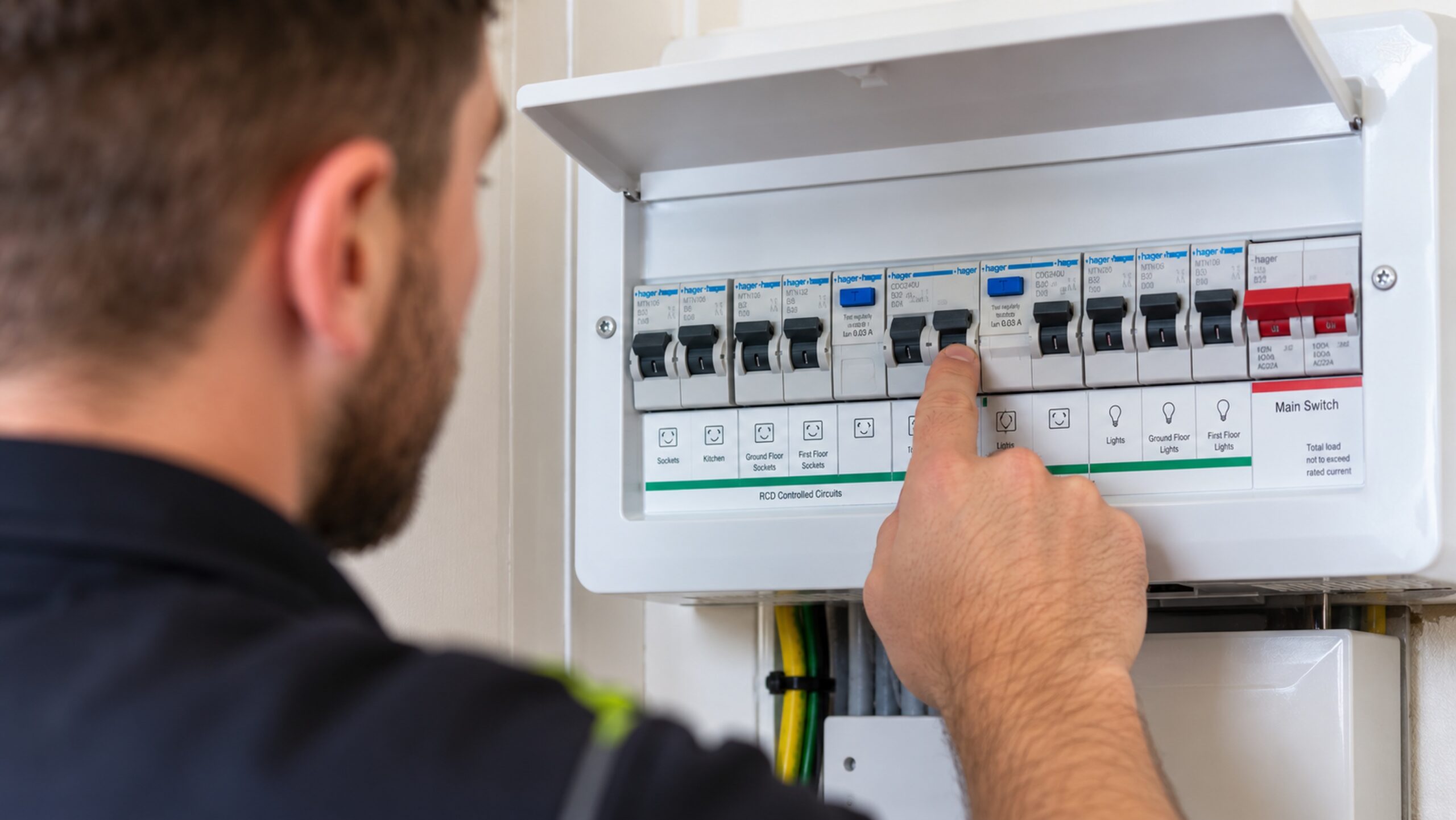
There's nothing more frustrating than your electricity suddenly switching off. Perhaps the kitchen sockets have stopped working, the lights have gone out, or a switch in your fuse box keeps turning itself off. Sometimes it happens when you switch on a particular appliance. Other times, the electricity trips without any obvious reason. If this sounds familiar, you're certainly not alone. Tripping electrics are a common electrical problem in UK homes, but understanding what's causing the issue isn't always straightforward. The important thing to remember is that your electrics usually trip for a reason.
Modern electrical installations contain protective devices designed to disconnect the electricity when certain faults or unsafe conditions occur. While losing power can be inconvenient, these devices play an important role in electrical safety. At LAIRD Electrical Contractors, we help homeowners across Leeds and West Yorkshire investigate electrical faults, identify the underlying causes and carry out appropriate repairs. In this guide, we'll explain why your electrics might keep tripping, what the different switches in your fuse box do, what you can safely check and when professional electrical fault finding is necessary.
Why do my electrics keep tripping?
When your electricity trips, it generally means a protective device has detected a condition that requires the circuit or supply to be disconnected. There are several possible causes, including:
- A faulty electrical appliance
- Too many appliances drawing power from one circuit
- Damaged or deteriorating electrical wiring
- Moisture entering electrical equipment
- A short circuit or earth fault
- Faulty sockets, switches or light fittings
- A problem with a protective device
- Electrical faults that only occur intermittently
The cause isn't always immediately obvious. For example, an appliance might operate normally for several minutes before developing a fault. Alternatively, a damaged cable could cause problems only when certain equipment is switched on. This is why repeatedly resetting a switch without understanding the reason for it tripping isn't a good solution.
What's the difference between an RCD, circuit breaker and trip switch?
Many homeowners refer to everything inside their consumer unit as a fuse or trip switch. Although these terms are commonly used, different protective devices perform different functions.
- Circuit breakers (MCBs)
A Miniature Circuit Breaker, or MCB, protects an electrical circuit against excessive current. This can happen when too much electrical equipment is connected to a circuit or when a short circuit occurs. For example, using several high-powered appliances on the same circuit may cause an overload. If the current exceeds the circuit breaker's operating limits, it disconnects the supply to protect the circuit.
- Residual Current Devices (RCDs)
An RCD is designed to detect certain types of electrical fault where current flows along an unintended path. These devices provide important additional protection against electric shock. An RCD may trip because of damaged wiring, moisture, faulty appliances or other electrical faults. Depending on the design of your consumer unit, one RCD may protect several circuits. This means a fault affecting one circuit could disconnect electricity to other parts of the property.
- RCBOs
An RCBO combines overcurrent protection and residual-current protection for an individual circuit. Modern consumer units often use individual RCBOs to provide protection to separate circuits. One advantage is that a fault on one RCBO-protected circuit doesn't necessarily disconnect other circuits in the property. You don't need to know which protective device you have before contacting an electrician. Explaining what's happening and which areas have lost power is often enough to begin investigating the problem.
See 5 common causes below
1. A faulty appliance could be causing the problem
One of the most common reasons for electrics tripping is a fault within an electrical appliance. Washing machines, tumble dryers, dishwashers, kettles, ovens and other household equipment can develop electrical faults over time. Possible causes include damaged internal components, moisture, deteriorating insulation or faulty heating elements. You might notice that the electricity trips whenever a particular appliance starts operating. For example, a washing machine could run normally until its heating element switches on, at which point the protective device operates.
What should you do?
If you suspect an appliance is causing the problem, stop using it. Where safe, switch it off and unplug it. Do not continue using an appliance that repeatedly trips the electricity, and don't attempt to repair its internal electrical components unless you're competent to do so. If you're unsure whether the fault is within the appliance or the fixed electrical installation, an electrician can investigate.
2. Your electrical circuit may be overloaded
Electrical circuits are designed to carry a certain amount of current. If too much equipment is connected and operated simultaneously, the circuit may become overloaded. This can happen when several high-powered appliances are used together, particularly where extension leads or multiple socket adaptors are involved. For example, operating several portable heaters from one circuit may place a significant demand on the installation. A circuit breaker may disconnect the electricity when the current exceeds its operating characteristics.
How can you reduce the risk?
Avoid overloading extension leads and socket adaptors, particularly with high-powered appliances. Use appliances in accordance with their manufacturers' instructions and avoid relying on extension leads as a permanent solution where additional sockets are needed. If a circuit repeatedly trips during normal household use, the installation should be assessed rather than simply changing the way you use appliances indefinitely. An electrician can determine whether the issue is overloading, a fault or something else.
3. Damaged or deteriorating wiring
Electrical wiring can deteriorate over time or become damaged through building work, movement, moisture or other factors. Although much of your home's wiring is concealed within walls, floors and ceilings, faults can develop without any visible warning. Potential problems include damaged cable insulation, loose connections and deterioration affecting the electrical installation. You may notice warning signs such as:
- Repeatedly tripping protective devices
- Flickering or intermittent lighting
- Buzzing or crackling sounds
- Discoloured electrical accessories
- Unusual heat around sockets or switches
- Burning smells
Not every electrical fault produces obvious symptoms, and some of these signs can indicate a potentially serious problem. If you notice burning smells, scorching, smoke or exposed live electrical parts, stop using the affected equipment and seek urgent professional assistance. If there is an immediate danger or fire, move to safety and contact the emergency services.
4. Moisture could be affecting your electrics
Water and electricity are a dangerous combination. Moisture entering electrical equipment can cause faults that result in an RCD or other protective device operating. This is particularly relevant to outdoor sockets, garden lighting, garages, sheds and equipment exposed to the weather. However, moisture-related faults can also occur indoors. For example, leaks, condensation or water entering an electrical accessory may affect its operation.
Why do my electrics trip when it rains?
If your electricity trips during heavy rain or damp weather, there may be a problem with external electrical equipment or wiring. Water could be entering a damaged outdoor light fitting, socket or junction box. The fault may disappear temporarily as the equipment dries out, only to return during the next period of wet weather. This doesn't mean the problem has resolved itself. An electrician should investigate the affected installation and identify the cause before repairs are carried out.
5. A faulty socket, switch or light fitting
Electrical accessories can develop faults through age, wear, damage or poor connections. A loose or deteriorating connection may cause overheating, intermittent operation or other electrical problems. Sometimes the issue becomes noticeable when a particular socket, switch or light fitting is used. For example, a circuit might trip whenever a specific light is switched on. However, the visible accessory isn't always the underlying cause. The fault could be elsewhere within the circuit. If an electrical accessory is damaged, unusually hot, buzzing or showing signs of scorching, stop using it and arrange an inspection.
What other questions that may be worth considering
Why does my fuse box keep tripping even when nothing is switched on?
This is a particularly frustrating problem because there may be no obvious appliance causing the fault. However, switching an appliance off doesn't necessarily mean every part of its electrical connection is isolated. Some appliances remain electrically connected even when they appear to be switched off. A fault may also exist within fixed wiring, electrical accessories or equipment connected directly to the installation. Other possibilities include moisture, damaged insulation or a problem affecting the protective device itself. If the electricity continues to trip without an obvious cause, professional electrical testing is usually the most appropriate next step.
Why does my trip switch keep going off at night?
Electrical faults don't necessarily occur consistently. Some appliances operate automatically at certain times, including refrigerators, freezers, heating equipment and devices controlled by timers. An intermittent fault may therefore become noticeable overnight. Environmental conditions, including moisture and temperature changes, can also influence certain electrical problems. Rather than assuming the trip switch itself is faulty, it's important to establish what is causing it to operate. Recording when the problem occurs and which equipment was running may help an electrician investigate.
Is it dangerous if my electrics keep tripping?
Repeated tripping should not be ignored. A protective device operating doesn't automatically mean there is an immediate danger, but it can indicate a fault that requires attention. The protective device may be doing exactly what it was designed to do. However, repeatedly resetting it without identifying the cause could leave an underlying electrical problem unresolved. The safest approach is to stop using any equipment suspected of causing the fault and arrange professional advice if the problem persists. Never bypass a protective device, replace it with an incorrectly rated device or attempt to defeat its safety function.
What can I safely check if my electrics trip?
There are a few straightforward observations you can make without opening electrical equipment or interfering with wiring.
- Check which areas have lost power
Is the problem affecting the whole property, just the sockets or perhaps one lighting circuit? - Think about what was operating
Did the electricity trip when you switched on a kettle, washing machine, heater or another appliance? - Look for obvious warning signs
Burning smells, smoke, damaged sockets or water near
Electrics keep tripping? Let LAIRD Electrical find the problem.
Electrical faults can be frustrating, inconvenient and potentially dangerous, but you don't have to work out what's causing the problem yourself. At LAIRD Electrical Contractors, we provide professional electrical fault finding and repairs for homeowners across Leeds and Yorkshire. Whether your fuse box keeps tripping, you're experiencing intermittent power problems or you're concerned about the safety of your electrics, we're here to help.
With competitive pricing, clear quotations and a 12-month workmanship guarantee, you can have confidence that your electrical work is in professional hands. Don't let a recurring electrical fault become a bigger problem.
Contact LAIRD Electrical Contractors today to discuss your electrical problem, arrange an inspection or request a competitive quotation.
Call 0113 4180 697 or tell us about your problem or electrical project

What are domestic electrics and why is professional electrical work so important?
Electricity is something we rely on every day, often without giving it much thought. From lighting and heating to kitchen appliances, home offices and electric vehicle charging, our homes depend on electrical systems that are safe, reliable and capable of keeping up with modern life. Whether you’re replacing an old consumer unit, installing additional sockets or planning a complete rewire, the quality of the electrical work matters.
Unfortunately, most homeowners have heard stories about tradespeople who fail to turn up, leave jobs unfinished or carry out work that falls short of the expected standard. Experiences like these can make it difficult to know who to trust, particularly when the work involves something as important as your home's electrics. Unlike decorating or other cosmetic improvements, much of an electrical installation is hidden from view, and poor workmanship can have serious consequences. That's why choosing a suitably qualified, experienced and reputable domestic electrician is so important.
At Laird Electrical Contractors Ltd, we believe homeowners should feel confident about who they're inviting into their property. Understanding why professional electrical work matters, what qualifications and credentials to look for, and how to recognise a trustworthy contractor can help you make an informed decision before any work begins.
What are domestic electrics?
Domestic electrics refers to the electrical systems, wiring and equipment installed in residential properties, including houses, flats, extensions and outbuildings. These installations distribute electricity around the home, supplying power to lighting, sockets, appliances, heating controls and other electrical equipment. Domestic electrical work includes everything from minor repairs and alterations to major installations and upgrades.
Some of the most common services include:
- Full and partial house rewiring
- Consumer unit and fuse box replacements
- Additional sockets and switches
- Indoor, outdoor and security lighting
- Electrical fault finding and repairs
- Electrical testing and inspections
- Electrical installations for kitchens, bathrooms and extensions
- Electric vehicle charger installations
- Earthing and protective bonding
- Electrical upgrades and improvements
Although these jobs vary considerably in size and complexity, they all require an appropriate understanding of electrical safety and installation standards.
Why are domestic electricians so important?
Domestic electricians are responsible for installing, maintaining and improving the electrical systems that homes rely on every day. Their work helps ensure electricity is distributed safely and that installations are suitable for the demands placed upon them. While some home improvements can be judged largely by their appearance, electrical work requires specialist knowledge and technical understanding. An installation may appear neat and function correctly at first, but that doesn't necessarily mean it has been completed safely or to the appropriate standard.
A competent domestic electrician understands how different parts of an electrical installation work together, how to identify potential risks and how to select suitable materials and protective equipment. They also understand the importance of inspecting and testing their work rather than simply assuming everything is correct because it switches on. Professional electricians play an important role in protecting homeowners, their families and their properties. Whether the work is a small alteration or part of a larger renovation, the same principles of safety, competence and attention to detail should apply.
Why does choosing a professional electrician matter?
There's a difference between someone who claims they can carry out electrical work and someone who can demonstrate the qualifications, experience and professional standards needed to do it properly. Unfortunately, the wider trades industry sometimes suffers from a poor reputation because of unreliable contractors, unfinished jobs, unclear pricing and substandard workmanship. While there are many excellent tradespeople working across the UK, homeowners are right to be careful about who they employ. Electrical work is an area where cutting corners can be particularly costly. Poor installation methods, unsuitable materials or a lack of appropriate testing may create problems that aren't immediately visible. Correcting those problems later can involve additional expense and disruption.
Choosing an established, competent electrical contractor gives you the opportunity to check their credentials, understand how they work and establish what you can expect before the job begins. A professional electrician should be able to explain their recommendations, provide a clear quotation, carry out the work to the relevant standards and take responsibility for the quality of the finished installation.
What should you look for when hiring a domestic electrician?
Before agreeing to any electrical work, it's worth carrying out a few straightforward checks. A reputable electrician should be happy to answer reasonable questions about their qualifications, experience, insurance and the work they're proposing. Here are some of the most important things to consider.
1. Relevant qualifications and competence
One of the first things to check is whether the electrician has the appropriate training, qualifications and experience for the work you need completing. Electrical qualifications demonstrate relevant technical knowledge, but it's also important to establish that the individual is competent to undertake the particular type of installation involved. Someone experienced in small domestic alterations may not necessarily have the same background as a contractor regularly completing complex electrical projects.
Don't be afraid to ask about qualifications, previous experience and whether the electrician has carried out similar work before. A professional contractor should be comfortable discussing their credentials.
2. A legitimate and established business
Before hiring an electrical contractor, check that you're dealing with a genuine business. Look for a consistent trading name, reliable contact details and a professional online presence. For a limited company, you can check its registration details through Companies House. This helps confirm that the company exists, although registration alone doesn't prove electrical competence or the quality of its work. A legitimate contractor should also be willing to provide business details and explain who will be responsible for carrying out the work.
3. Appropriate insurance
Electrical contractors should have appropriate insurance for the services they provide. Public liability insurance is particularly important because it can provide protection in relation to certain claims involving injury or property damage arising from business activities, subject to the terms of the policy. It's reasonable to ask whether the electrician is insured and request confirmation of their cover. For larger projects, you may also want to check that the policy is suitable for the scale and nature of the work. Insurance doesn't replace competence or good workmanship, but it is an important part of operating professionally.
4. Registration with a recognised competent person scheme
Some electrical contractors are registered with government-authorised competent person schemes, such as NICEIC or NAPIT. For relevant domestic electrical work in England, registration with an appropriate scheme can allow a contractor to self-certify compliance with the Building Regulations, where the scheme covers that work. It's important to understand that scheme registration is not a legal requirement for every electrician or every type of electrical job. However, it can be a useful credential to check, particularly when you're arranging work that requires Building Regulations notification. If a contractor claims to be registered, ask for their registration details and verify them directly with the relevant scheme.
5. Evidence of previous workmanship
A professional electrician should be able to demonstrate the standard of work they carry out. This might include photographs of completed installations, examples of previous projects or information about similar jobs they've undertaken. For larger projects, it's particularly useful to see work that reflects the type of installation you're planning. Photographs alone won't prove that an installation is electrically safe, but they can give you an indication of the contractor's attention to detail, organisation and overall approach. You can also ask how the work will be inspected and tested, and what certification will be provided where applicable.
6. Customer reviews and references
Recommendations from previous customers can be one of the most useful ways to assess a tradesperson. Online reviews may provide insight into reliability, communication, punctuality and the standard of service customers have received. Rather than focusing only on an overall star rating, take time to read what people actually say about their experience. For substantial electrical projects, you can also ask whether the contractor can provide references from previous customers who have agreed to be contacted. A recommendation from someone who has had similar work completed can offer valuable reassurance before you commit.
7. A clear, written quotation
A professional electrical contractor should explain what work is being proposed and provide a quotation that clearly sets out the agreed scope. This helps prevent misunderstandings about what is included, what materials will be supplied and whether any additional costs might arise. Before accepting a quotation, check that you understand:
- What electrical work will be carried out
- Whether materials and labour are included
- Whether inspection, testing and relevant certification are included
- The expected timescale for the project
- How unforeseen work or additional costs will be handled
- The payment terms and any deposit requirements
The cheapest quotation isn't necessarily the best option. It's more important to compare what each contractor is offering and whether the proposed work meets your requirements.
8. Workmanship guarantees and aftercare
Before hiring an electrician, ask what guarantee they provide on their workmanship and how they deal with problems that arise after completion.
For example, you might look for a 12-month workmanship guarantee, although the period and terms will vary between contractors. Some may offer longer guarantees, and manufacturers' warranties on electrical products are usually separate from guarantees covering installation work. Make sure you understand what is covered, how long the guarantee lasts and whether any exclusions apply. Where a guarantee is offered, ask for the details in writing. A guarantee can be a useful sign that a contractor is prepared to stand behind their work, but it should be considered alongside qualifications, insurance, references and other evidence of professionalism.
9. Good communication and reliability
Technical ability is essential, but the way an electrician communicates can tell you a great deal about how professionally they operate. A reliable contractor should respond to enquiries within a reasonable time, explain the proposed work clearly and keep you informed if arrangements need to change. They should also be realistic about availability and timescales rather than making promises they cannot keep. When work is taking place in your home, these details matter. Knowing who is attending, when the work will happen and what disruption to expect makes the experience much more straightforward.
Why workmanship should never be an afterthought
Good electrical workmanship goes beyond completing a job that looks neat. It involves using suitable materials, following appropriate installation methods, making secure connections and carrying out the necessary checks. Many important parts of an electrical installation are concealed once the work is complete. This means homeowners often have to rely on the electrician's competence and professionalism rather than being able to inspect every detail themselves. That's why it's worth choosing a contractor who takes pride in their work and is willing to explain how the installation will be completed.
Professional workmanship should also extend to the way your property is treated. Taking reasonable care to protect working areas, keeping disruption to a minimum and leaving the space tidy are all part of delivering a good service. An electrician who values their reputation should understand that the customer experience matters just as much as the technical work.
Why trust and accountability matter
Inviting a tradesperson into your home requires trust. You're relying on their knowledge, their judgement and their commitment to doing the job properly. That trust should be supported by more than a verbal promise. Qualifications, insurance, verified registrations where relevant, customer references, written quotations and clear guarantees all help homeowners make a more informed decision. No single credential can guarantee that every job will be perfect. However, taking the time to check several of these factors can significantly improve your understanding of who you're hiring. A reputable electrical contractor should welcome sensible questions and be prepared to explain how they work. If someone is unwilling to discuss their qualifications, provide basic business details or clarify what's included in their quotation, it's reasonable to consider other options.
Choosing a domestic electrician in Leeds and West Yorkshire
If you're looking for a domestic electrician in Leeds, it's worth taking the time to find a contractor who offers the right combination of technical competence, reliability and professional workmanship.
At Laird Electrical Contractors Ltd, we understand that homeowners want more than someone who can simply complete an electrical job. They want clear advice, dependable service and confidence that their property is being treated with care. We provide domestic electrical services across Leeds and West Yorkshire, covering electrical installations, repairs, improvements and larger projects. Our approach is centred on understanding each customer's requirements and delivering work with care and attention to detail. Whether you're planning improvements or arranging electrical work as part of a renovation, choosing the right contractor is an important first step.
Need a reliable domestic electrician? Put your home in safe hands with LAIRD Electrical.
Your home's electrical installation plays an essential role in everyday life, and choosing the right electrician is about more than simply getting the job done. At LAIRD Electrical Contractors, we provide professional domestic electrical services for homeowners across Leeds and Yorkshire. Whether you need additional sockets, lighting upgrades, electrical fault finding, a consumer unit replacement or a full or partial rewire, we're here to help.
As an NICEIC Approved Contractor, we understand the importance of quality workmanship, electrical safety and reliable service. With competitive pricing, clear quotations and a 12-month workmanship guarantee, you can have confidence that your electrical work is being handled professionally, with care and attention to detail.
Whether you're planning home improvements, renovating your property or need an experienced electrician for essential repairs, choosing a contractor you can trust makes all the difference.
Contact LAIRD Electrical Contractors today to discuss your domestic electrical requirements, arrange a visit or request a competitive quotation.
Call 0113 4180 697 or tell us about your home electrical project.
