
Common reasons why your electrics keep tripping
Does your fuse box keep tripping, leaving you without power? Discover why it happens, what you can safely check and when it’s time to call a professional electrician.
There’s nothing more frustrating than your electricity suddenly switching off. Perhaps the kitchen sockets have stopped working, the lights have gone out, or a switch in your fuse box keeps turning itself off. Sometimes it happens when you switch on a particular appliance. Other times, the electricity trips without any obvious reason. If this sounds familiar, you’re certainly not alone. Tripping electrics are a common electrical problem in UK homes, but understanding what’s causing the issue isn’t always straightforward. The important thing to remember is that your electrics usually trip for a reason.
Modern electrical installations contain protective devices designed to disconnect the electricity when certain faults or unsafe conditions occur. While losing power can be inconvenient, these devices play an important role in electrical safety. At LAIRD Electrical Contractors, we help homeowners across Leeds and West Yorkshire investigate electrical faults, identify the underlying causes and carry out appropriate repairs. In this guide, we’ll explain why your electrics might keep tripping, what the different switches in your fuse box do, what you can safely check and when professional electrical fault finding is necessary.
Why do my electrics keep tripping?
When your electricity trips, it generally means a protective device has detected a condition that requires the circuit or supply to be disconnected. There are several possible causes, including:
- A faulty electrical appliance
- Too many appliances drawing power from one circuit
- Damaged or deteriorating electrical wiring
- Moisture entering electrical equipment
- A short circuit or earth fault
- Faulty sockets, switches or light fittings
- A problem with a protective device
- Electrical faults that only occur intermittently
The cause isn’t always immediately obvious. For example, an appliance might operate normally for several minutes before developing a fault. Alternatively, a damaged cable could cause problems only when certain equipment is switched on. This is why repeatedly resetting a switch without understanding the reason for it tripping isn’t a good solution.
What’s the difference between an RCD, circuit breaker and trip switch?
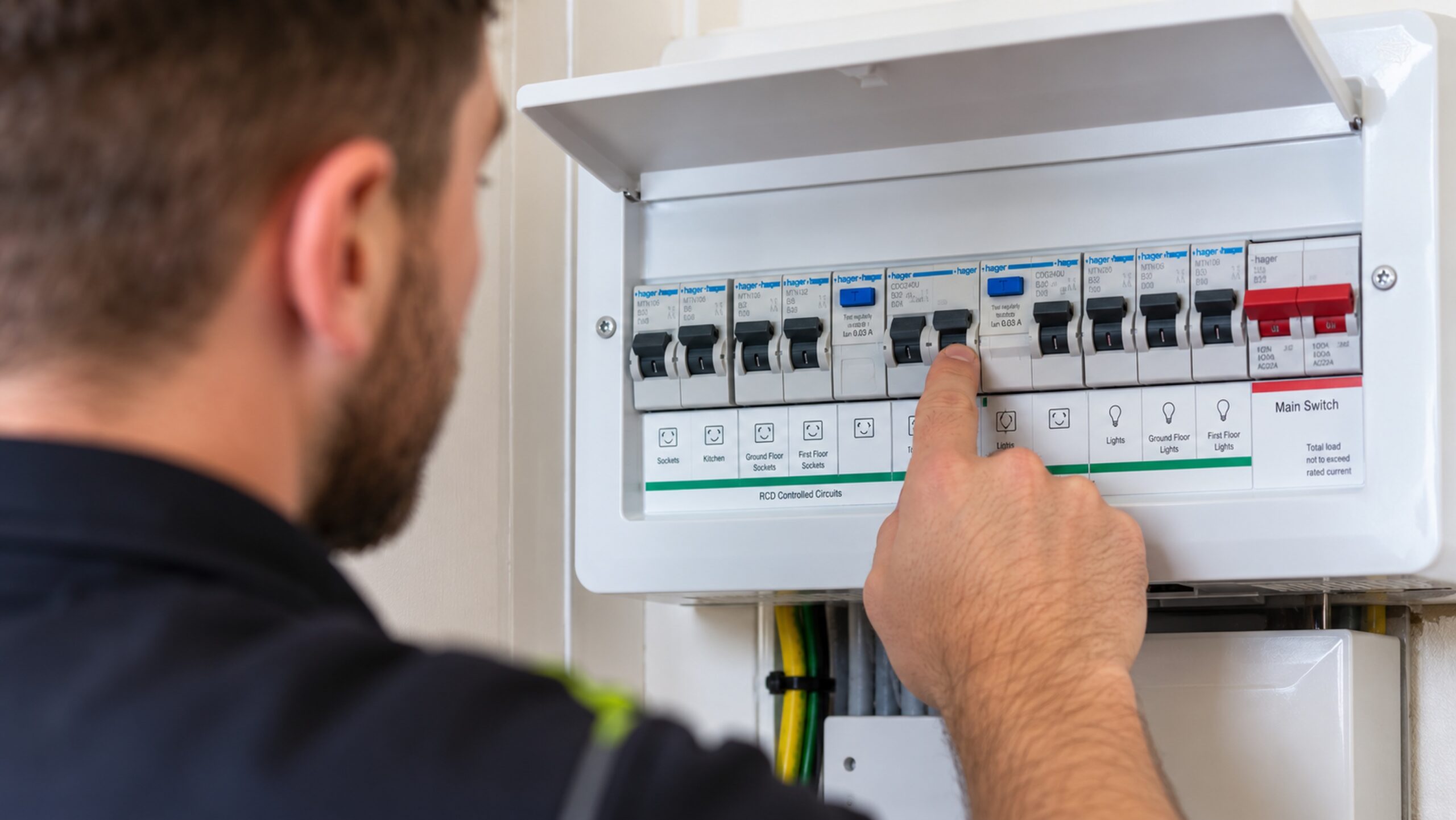
Many homeowners refer to everything inside their consumer unit as a fuse or trip switch. Although these terms are commonly used, different protective devices perform different functions.
– Circuit breakers (MCBs)
A Miniature Circuit Breaker, or MCB, protects an electrical circuit against excessive current. This can happen when too much electrical equipment is connected to a circuit or when a short circuit occurs. For example, using several high-powered appliances on the same circuit may cause an overload. If the current exceeds the circuit breaker’s operating limits, it disconnects the supply to protect the circuit.
– Residual Current Devices (RCDs)
An RCD is designed to detect certain types of electrical fault where current flows along an unintended path. These devices provide important additional protection against electric shock. An RCD may trip because of damaged wiring, moisture, faulty appliances or other electrical faults. Depending on the design of your consumer unit, one RCD may protect several circuits. This means a fault affecting one circuit could disconnect electricity to other parts of the property.
– RCBOs
An RCBO combines overcurrent protection and residual-current protection for an individual circuit. Modern consumer units often use individual RCBOs to provide protection to separate circuits. One advantage is that a fault on one RCBO-protected circuit doesn’t necessarily disconnect other circuits in the property. You don’t need to know which protective device you have before contacting an electrician. Explaining what’s happening and which areas have lost power is often enough to begin investigating the problem.
See 5 common causes below
1. A faulty appliance could be causing the problem
One of the most common reasons for electrics tripping is a fault within an electrical appliance. Washing machines, tumble dryers, dishwashers, kettles, ovens and other household equipment can develop electrical faults over time. Possible causes include damaged internal components, moisture, deteriorating insulation or faulty heating elements. You might notice that the electricity trips whenever a particular appliance starts operating. For example, a washing machine could run normally until its heating element switches on, at which point the protective device operates.
What should you do?
If you suspect an appliance is causing the problem, stop using it. Where safe, switch it off and unplug it. Do not continue using an appliance that repeatedly trips the electricity, and don’t attempt to repair its internal electrical components unless you’re competent to do so. If you’re unsure whether the fault is within the appliance or the fixed electrical installation, an electrician can investigate.
2. Your electrical circuit may be overloaded
Electrical circuits are designed to carry a certain amount of current. If too much equipment is connected and operated simultaneously, the circuit may become overloaded. This can happen when several high-powered appliances are used together, particularly where extension leads or multiple socket adaptors are involved. For example, operating several portable heaters from one circuit may place a significant demand on the installation. A circuit breaker may disconnect the electricity when the current exceeds its operating characteristics.
How can you reduce the risk?
Avoid overloading extension leads and socket adaptors, particularly with high-powered appliances. Use appliances in accordance with their manufacturers’ instructions and avoid relying on extension leads as a permanent solution where additional sockets are needed. If a circuit repeatedly trips during normal household use, the installation should be assessed rather than simply changing the way you use appliances indefinitely. An electrician can determine whether the issue is overloading, a fault or something else.
3. Damaged or deteriorating wiring
Electrical wiring can deteriorate over time or become damaged through building work, movement, moisture or other factors. Although much of your home’s wiring is concealed within walls, floors and ceilings, faults can develop without any visible warning. Potential problems include damaged cable insulation, loose connections and deterioration affecting the electrical installation. You may notice warning signs such as:
- Repeatedly tripping protective devices
- Flickering or intermittent lighting
- Buzzing or crackling sounds
- Discoloured electrical accessories
- Unusual heat around sockets or switches
- Burning smells
Not every electrical fault produces obvious symptoms, and some of these signs can indicate a potentially serious problem. If you notice burning smells, scorching, smoke or exposed live electrical parts, stop using the affected equipment and seek urgent professional assistance. If there is an immediate danger or fire, move to safety and contact the emergency services.
4. Moisture could be affecting your electrics
Water and electricity are a dangerous combination. Moisture entering electrical equipment can cause faults that result in an RCD or other protective device operating. This is particularly relevant to outdoor sockets, garden lighting, garages, sheds and equipment exposed to the weather. However, moisture-related faults can also occur indoors. For example, leaks, condensation or water entering an electrical accessory may affect its operation.
Why do my electrics trip when it rains?
If your electricity trips during heavy rain or damp weather, there may be a problem with external electrical equipment or wiring. Water could be entering a damaged outdoor light fitting, socket or junction box. The fault may disappear temporarily as the equipment dries out, only to return during the next period of wet weather. This doesn’t mean the problem has resolved itself. An electrician should investigate the affected installation and identify the cause before repairs are carried out.
5. A faulty socket, switch or light fitting
Electrical accessories can develop faults through age, wear, damage or poor connections. A loose or deteriorating connection may cause overheating, intermittent operation or other electrical problems. Sometimes the issue becomes noticeable when a particular socket, switch or light fitting is used. For example, a circuit might trip whenever a specific light is switched on. However, the visible accessory isn’t always the underlying cause. The fault could be elsewhere within the circuit. If an electrical accessory is damaged, unusually hot, buzzing or showing signs of scorching, stop using it and arrange an inspection.
What other questions that may be worth considering
Why does my fuse box keep tripping even when nothing is switched on?
This is a particularly frustrating problem because there may be no obvious appliance causing the fault. However, switching an appliance off doesn’t necessarily mean every part of its electrical connection is isolated. Some appliances remain electrically connected even when they appear to be switched off. A fault may also exist within fixed wiring, electrical accessories or equipment connected directly to the installation. Other possibilities include moisture, damaged insulation or a problem affecting the protective device itself. If the electricity continues to trip without an obvious cause, professional electrical testing is usually the most appropriate next step.
Why does my trip switch keep going off at night?
Electrical faults don’t necessarily occur consistently. Some appliances operate automatically at certain times, including refrigerators, freezers, heating equipment and devices controlled by timers. An intermittent fault may therefore become noticeable overnight. Environmental conditions, including moisture and temperature changes, can also influence certain electrical problems. Rather than assuming the trip switch itself is faulty, it’s important to establish what is causing it to operate. Recording when the problem occurs and which equipment was running may help an electrician investigate.
Is it dangerous if my electrics keep tripping?
Repeated tripping should not be ignored. A protective device operating doesn’t automatically mean there is an immediate danger, but it can indicate a fault that requires attention. The protective device may be doing exactly what it was designed to do. However, repeatedly resetting it without identifying the cause could leave an underlying electrical problem unresolved. The safest approach is to stop using any equipment suspected of causing the fault and arrange professional advice if the problem persists. Never bypass a protective device, replace it with an incorrectly rated device or attempt to defeat its safety function.
What can I safely check if my electrics trip?
There are a few straightforward observations you can make without opening electrical equipment or interfering with wiring.
- Check which areas have lost power
Is the problem affecting the whole property, just the sockets or perhaps one lighting circuit? - Think about what was operating
Did the electricity trip when you switched on a kettle, washing machine, heater or another appliance? - Look for obvious warning signs
Burning smells, smoke, damaged sockets or water near
Electrics keep tripping? Let LAIRD Electrical find the problem.
Electrical faults can be frustrating, inconvenient and potentially dangerous, but you don’t have to work out what’s causing the problem yourself. At LAIRD Electrical Contractors, we provide professional electrical fault finding and repairs for homeowners across Leeds and Yorkshire. Whether your fuse box keeps tripping, you’re experiencing intermittent power problems or you’re concerned about the safety of your electrics, we’re here to help.
With competitive pricing, clear quotations and a 12-month workmanship guarantee, you can have confidence that your electrical work is in professional hands. Don’t let a recurring electrical fault become a bigger problem.
Contact LAIRD Electrical Contractors today to discuss your electrical problem, arrange an inspection or request a competitive quotation.
Call 0113 4180 697 or tell us about your problem or electrical project