



Investment in the right lighting can transform a home
Lighting is one of the most noticeable electrical improvements you can make to a property. A carefully planned scheme can make rooms more practical, create atmosphere, reduce energy consumption and give you greater control over how your home feels from morning through to evening. Modern lighting also gives us far more choice than simply deciding where to put a bulb.
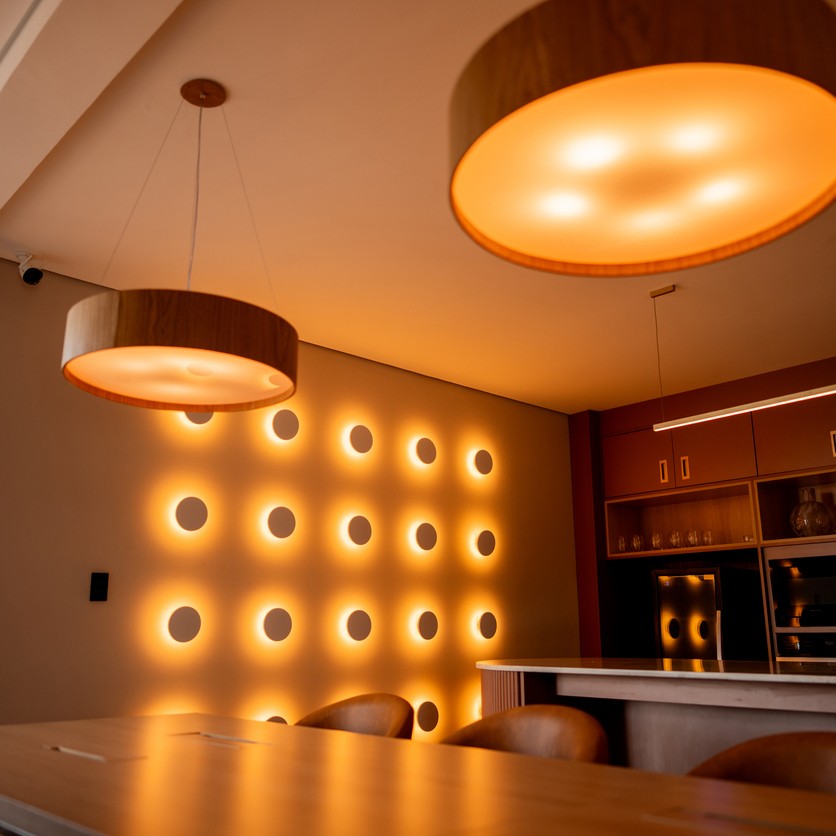
Transform the look and feel of your home
The best lighting schemes don’t rely on one fitting to do everything.
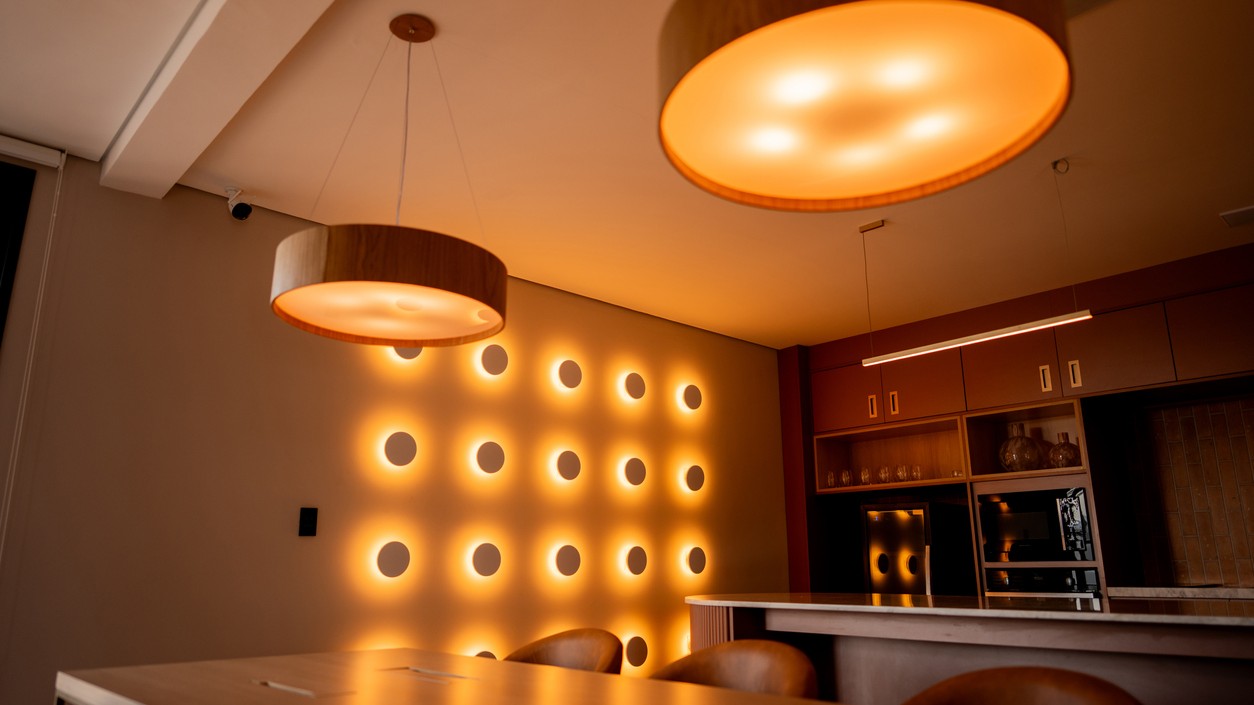
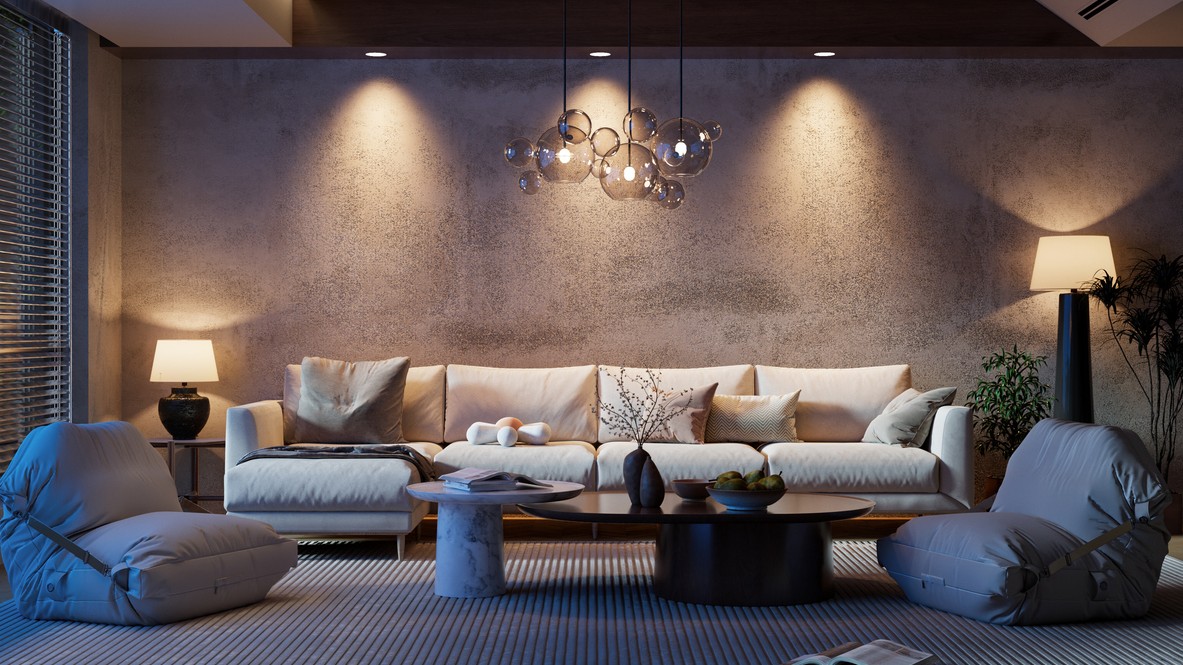
Combining different sources of light can make a room feel more spacious, comfortable and interesting while ensuring there’s enough practical illumination exactly where you need it. Downlights might provide general illumination, pendants can create a focal point, under-cabinet lighting can illuminate kitchen worktops and wall or feature lights can introduce warmth and depth.
We’ll consider how you use the space, furniture positions, natural daylight and architectural features before helping you decide where lighting will have the greatest impact.
✨ Lighting ideas for around your home
🍳 Task lighting over kitchen worktops
🍽️ Pendants above islands and dining tables
🛋️ Softer layered lighting for living rooms
🛏️ Bedside and reading lights
🚿 Bathroom lighting
🏗️ Downlights for contemporary interiors
🖼️ Lighting for artwork and architectural features
🪜 Stair and hallway lighting
🚪 Entrance and porch lighting
👗 Wardrobe and dressing-room lighting
📚 Focused home-office lighting
✨ Atmospheric lighting for character
Improve efficiency, comfort and wellbeing
Modern lighting isn’t only about using less electricity. Brightness, colour, positioning and when we use artificial light can all affect how comfortable a space feels.
Light is also one of the environmental signals involved in regulating our circadian rhythm – the body’s natural day-night timing system. Bright light is useful during daytime activity, while reducing the intensity of artificial light in the evening can create an environment that’s more appropriate for winding down.
Modern LED lighting gives homeowners much greater control over these characteristics. Different colour temperatures, dimming, lighting zones and smart controls mean the same room can provide bright practical illumination during the day and softer, warmer-feeling light in the evening. The aim isn’t to label individual light bulbs as “healthy” or “unhealthy”. It’s about creating flexible lighting appropriate to the space, activity and time of day.
🌿 Discover the benefits of modern lighting
☀️ Bright, practical lighting for daytime spaces
🌅 Warmer lighting for relaxed evenings
🔅 Dimming to reduce brightness
💡 Colour temperatures for different environments
📚 Focused task lighting for reading and working
🛋️ Layered lighting for relaxation
🛏️ Low-level lighting for bedrooms and nighttime
🍳 Clear illumination over kitchen work surfaces
🪞 Good-quality lighting around mirrors
📱 Lighting scenes for different activities
⚡ Energy-efficient LED technology
🌿 Lighting designed around comfort & efficiency
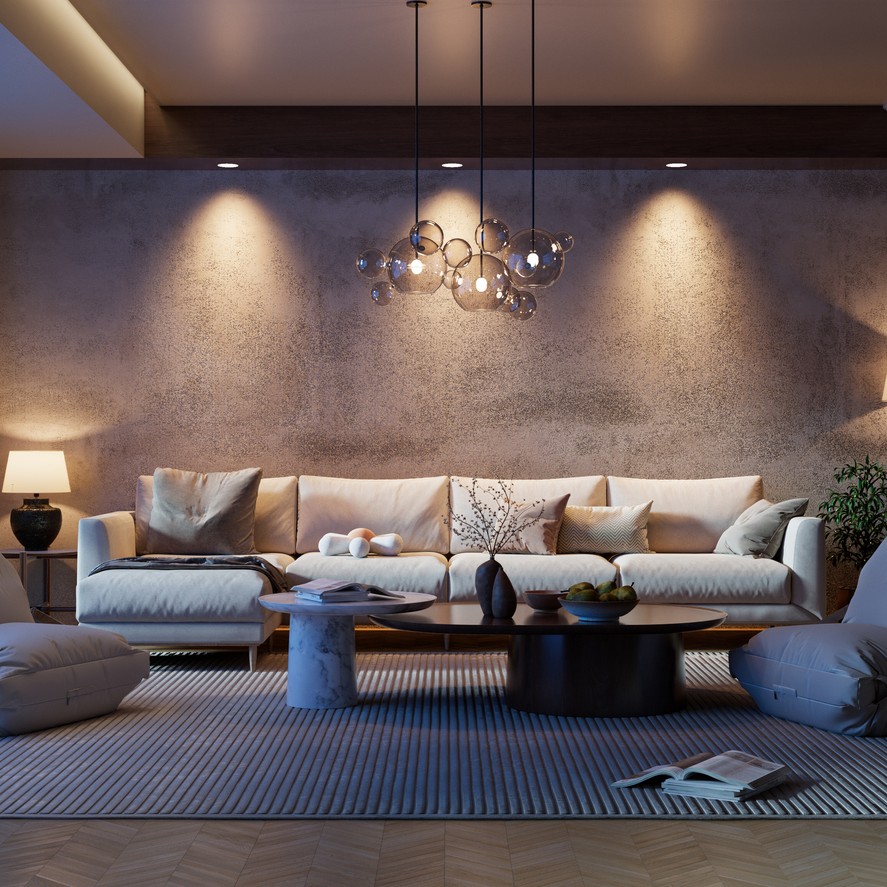

Add smart lighting, controls and security
Modern lighting doesn’t always need to be controlled by a traditional on/off switch.
Dimmers, motion sensors, timers and smart controls can make lighting much more flexible, allowing you to change the atmosphere of a room, automate exterior lights or create different settings for particular activities.
A kitchen, for example, might have bright task lighting while food is being prepared, softer lighting for dinner and a completely different setting later in the evening. We’ll help you choose controls that genuinely make your home easier and more enjoyable to use rather than introducing technology simply for the sake of it.
📱 Smarter ways to control your lighting
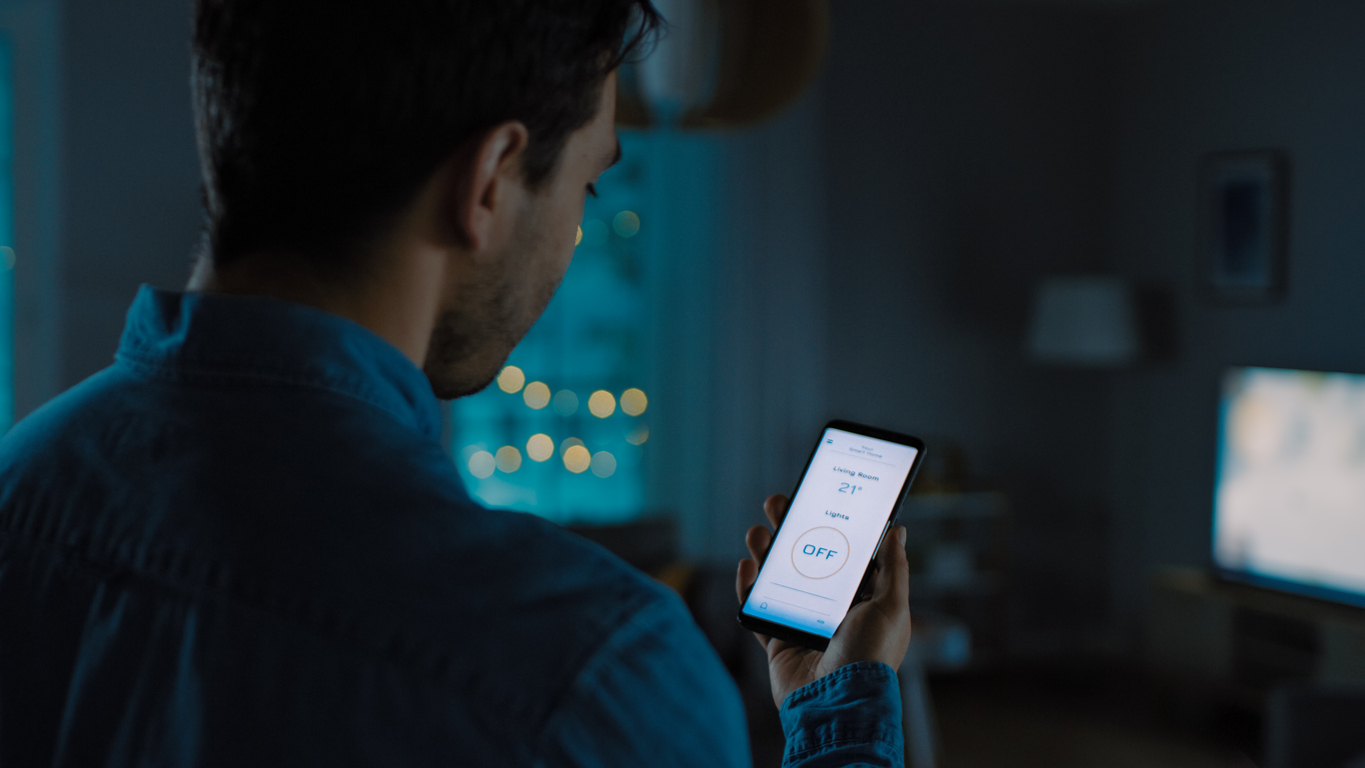
📱 Control compatible lighting from your phone
🗣️ Integrate compatible systems & voice control
🔅 Adjust brightness with dimming
🚶 Activate lights using movement sensors
⏱️ Use timers and schedules
🌅 Automate lighting around different times of day
🔒 Add sensor-controlled security lighting
🏡 Create scenes for different activities
🌙 Create dedicated evening settings
💡 Control different lighting zones independently
🚪 Automate entrance lighting
🌿 Control garden lighting from indoors
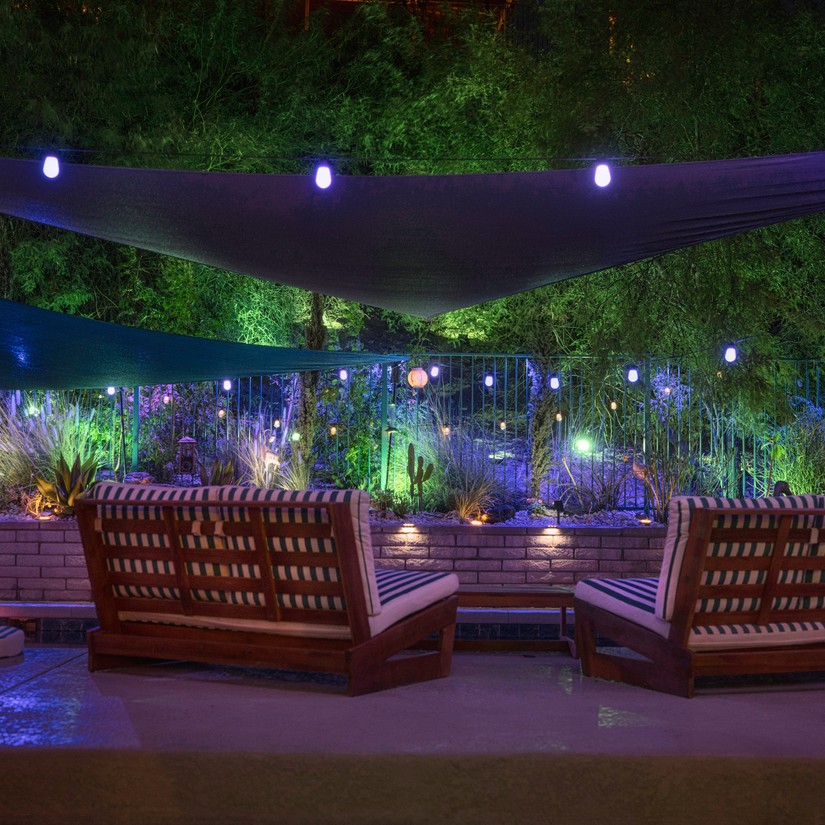
Bring garden and outdoor spaces to life
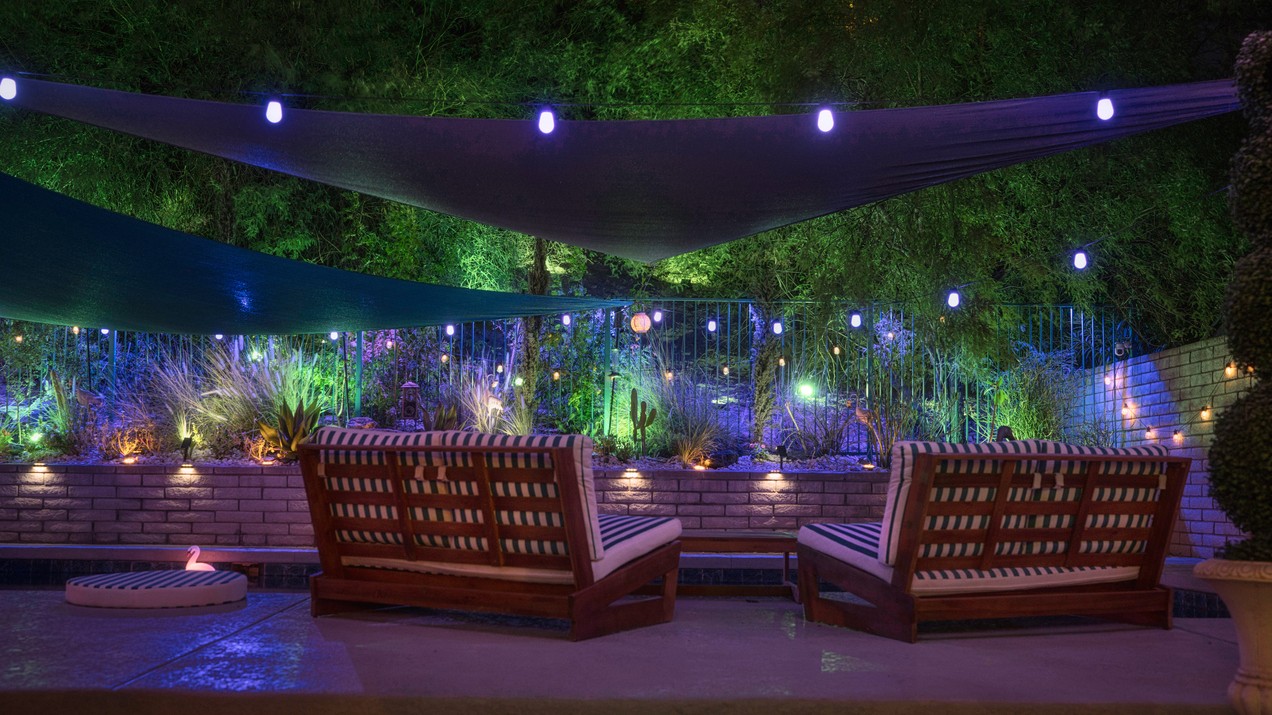
Your garden doesn’t have to disappear when the sun goes down. Carefully positioned outdoor lighting can illuminate paths and steps, highlight trees and planting, create atmosphere around patios and entertaining areas and make entrances easier to navigate.
Good garden lighting doesn’t mean making the entire garden as bright as possible. Often, illuminating selected areas produces a much more attractive result, creating contrast and depth while putting useful light where it’s actually required. We install practical and decorative exterior lighting using equipment suitable for outdoor environments.
🌙 Bring some magic to your garden
🌳 Highlight trees and planting
🪴 Illuminate landscaping and garden features
🚶 Light paths and steps
🏡 Add architectural lighting to your property
🍽️ Illuminate patios and entertaining areas
🚪 Improve entrance lighting
🧱 Highlight walls and textures
🏚️ Light garages and outbuildings
💡 Add practical working light
🌙 Create subtle evening atmosphere
🔒 Improve visibility around your property
⏱️ Automate exterior lighting
Ask yourself…
If you answer yes to one or more of these questions, it could be worth talking to us about improving your home’s lighting.
Are there rooms that never seem to have enough useful light?
Do kitchen worktops, desks or other task areas suffer from shadows?
Does your lighting feel too harsh when you’re relaxing in the evening?
Do you use essentially the same lighting from morning until bedtime?
Would you like different lighting for working, cooking, entertaining and relaxing?
Are you planning a kitchen, bathroom, extension or major renovation?
Would your garden or patio benefit from lighting after dark?
Are paths, steps or entrances difficult to see at night?
Would you like lighting to operate automatically using sensors, timers or smart controls?
Would you like professional advice on positioning, colour temperature and lighting design?
We’ll look at how you use each space, discuss what you like and dislike about your existing lighting and help you create a solution balancing appearance, practicality, comfort, efficiency and budget.
CONTACT LAIRD ELECTRICAL
Get in touch to discuss your electrical requirements today.
What type of lighting does your home need?
You don’t need to know exactly which fittings, beam angles or lighting layouts you need before speaking to us. Good lighting schemes often combine several different types of illumination, with each performing a particular job. Understanding the three main layers can help explain why.
Ambient lighting
Task lighting
Accent lighting
Provides general background illumination.
Puts focused light where a particular activity takes place.
Highlights features and creates visual interest or atmosphere.
Ceiling fittings, downlights, pendants and wall lights.
Kitchen worktop lights, desk lights, reading lights and mirror lighting.
Picture lights, shelf lighting, wall washing and architectural lighting.
Makes the overall space comfortable and usable.
Provides useful illumination exactly where it’s needed.
Adds depth, character and emphasis.
You need effective everyday illumination.
You’re lighting kitchens, workspaces or other practical areas.
You want the room to feel more considered and visually interesting.
The best result often comes from combining these layers rather than expecting one type of fitting to do everything.
Our lighting installation services
Every home and lighting project is different, which is why we tailor our lighting installations around your space, lifestyle and the atmosphere you want to create.
Whether you’re upgrading a few existing lights or planning a complete lighting scheme, we’ll create a solution that works beautifully with your home and the way you use it.


Myth busting
There are plenty of misconceptions about modern lighting. Here are some of the most common myths we hear—and the facts behind them.
Myth
More lights always mean better lighting.
Fact
Good lighting is about purpose and positioning, not simply quantity. A smaller number of thoughtfully positioned fittings can create a much better result than covering a ceiling with lights without considering what they’re actually illuminating.
Myth
LED lighting is always cold and clinical.
Fact
LEDs are available in a wide range of colour temperatures. A warm-white LED can create a very different atmosphere from a cooler-white fitting, making LED technology suitable for everything from relaxing living rooms to practical workspaces.
Myth
LED lighting is bad for you because it produces blue light.
Fact
It’s more complicated than that. Light can influence our circadian system, but its effects depend on factors including brightness, spectrum, timing and duration. Shorter-wavelength light can have a stronger biological effect, which is one reason bright, cooler lighting may be more appropriate during daytime than late in the evening. Modern LEDs also provide considerable flexibility over colour temperature, brightness and controls.
Myth
The brighter a room is, the better the lighting.
Fact
Not necessarily. Bright illumination can be extremely useful for cooking, cleaning and working, but the same level of light may feel uncomfortable when you’re relaxing in the evening. A flexible lighting scheme gives you the right amount of light for what you’re doing.
Myth
Every modern home needs lots of downlights.
Fact
Downlights are useful, but they’re only one option. Pendants, wall lights, concealed lighting, lamps and accent lighting can add depth and character while placing light exactly where it’s needed.
Myth
Smart lighting makes everything unnecessarily complicated.
Fact
Smart lighting can be as simple or sophisticated as you want. Used well, it can make everyday lighting easier—from automatically switching exterior lights to creating an evening scene or adjusting several lighting zones together.
Jargon buster: lighting
No jargon. Just straightforward advice.
Lighting has its own terminology, but you shouldn’t need to become a lighting designer to understand what’s being installed in your home. Here are some of the most common terms you may hear when planning a lighting upgrade.
LED
LED stands for Light Emitting Diode. LEDs provide energy-efficient lighting and are available in a huge range of fitting styles, brightness levels and colour temperatures.
Lumens
Lumens describe how much visible light a lamp or fitting produces. Unlike watts, which measure electrical power consumption, lumens tell you how much light you’re actually getting.
Colour temperature
Colour temperature describes how warm or cool white light appears and is measured in Kelvin (K). Lower values such as 2700K appear warmer, while higher values such as 4000K create a cooler-looking white.
CRI
CRI stands for Colour Rendering Index. It describes how naturally and accurately colours appear under a particular light source, which can be especially important in kitchens, dressing areas, bathrooms and around artwork.
Dimmable
Dimmable lighting allows you to adjust brightness rather than simply switching lights on or off. The fitting, driver and dimmer need to be compatible for reliable performance.
Beam angle
Beam angle describes how widely a fitting spreads its light. A narrow beam creates more focused illumination, while a wider beam spreads light across a larger area.
Circadian rhythm
Your circadian rhythm is your body’s natural 24-hour timing system, which influences patterns including sleep and wakefulness. Light is one of the environmental signals that helps regulate this rhythm.
PIR sensor
PIR stands for Passive Infrared. A PIR sensor detects movement and is commonly used to switch security, entrance or outdoor lighting on automatically.
IP rating
An IP rating describes the level of protection electrical equipment provides against things such as solid objects and water. This is particularly important when choosing lighting for bathrooms and outdoor areas.
Smart lighting
Smart lighting uses compatible connected or automated controls. Depending on the system, lights can be operated through apps, schedules, sensors, voice control or predefined lighting scenes.