

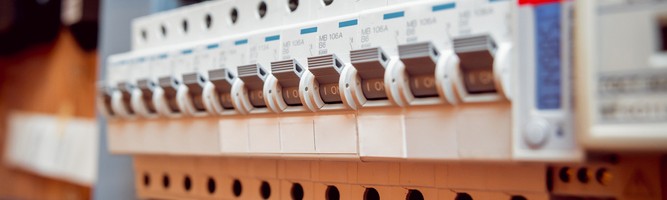
Why do homeowners upgrade their consumer unit?
Your consumer unit is one of the most important parts of your electrical installation. While an older fuse board isn’t automatically unsafe simply because of its age, modern consumer units can provide significantly improved protection and greater flexibility for today’s electrical demands.
Upgrading can also prepare your property for future improvements and provide peace of mind that the circuits throughout your home benefit from appropriate modern protection.


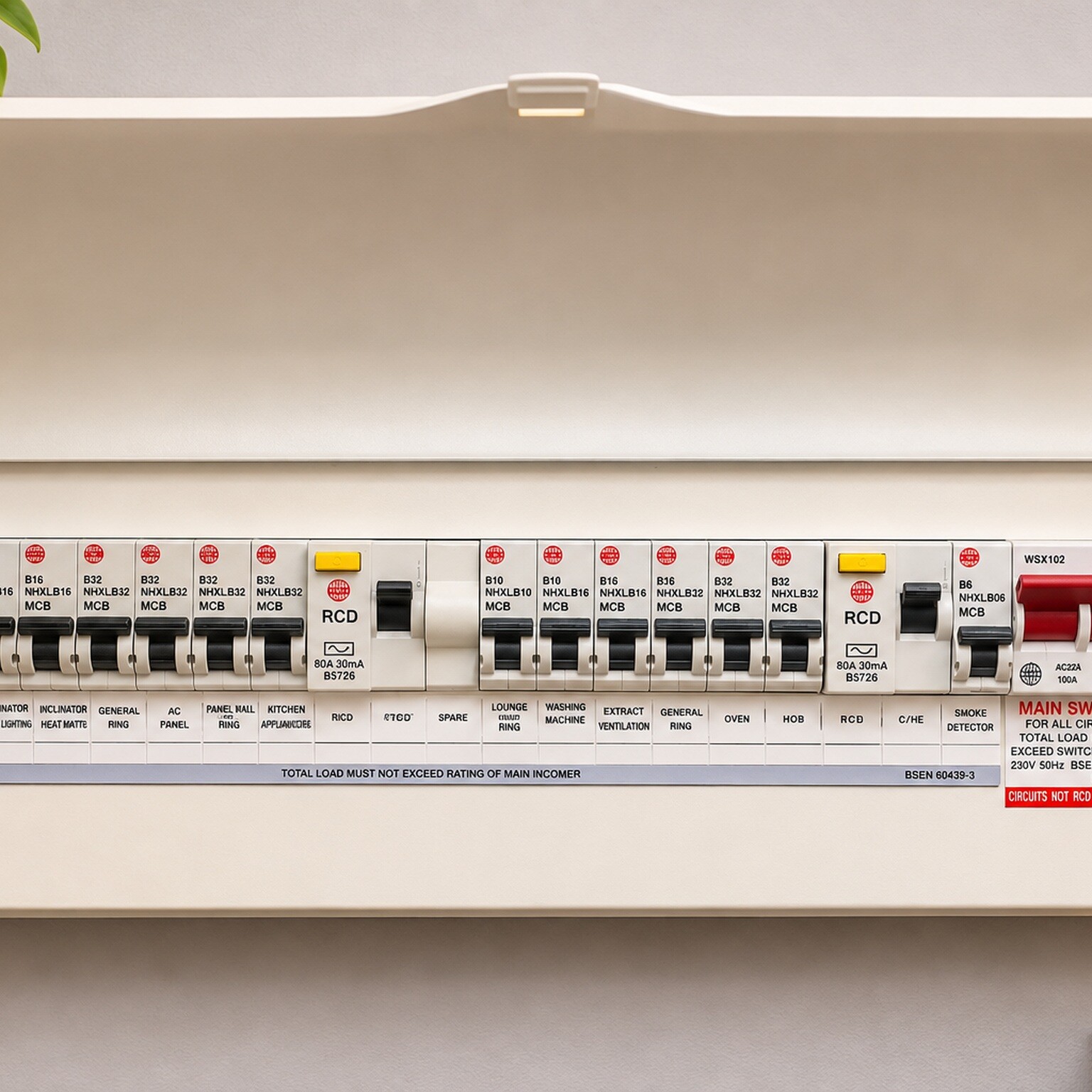
Upgrade your home's electrical protection
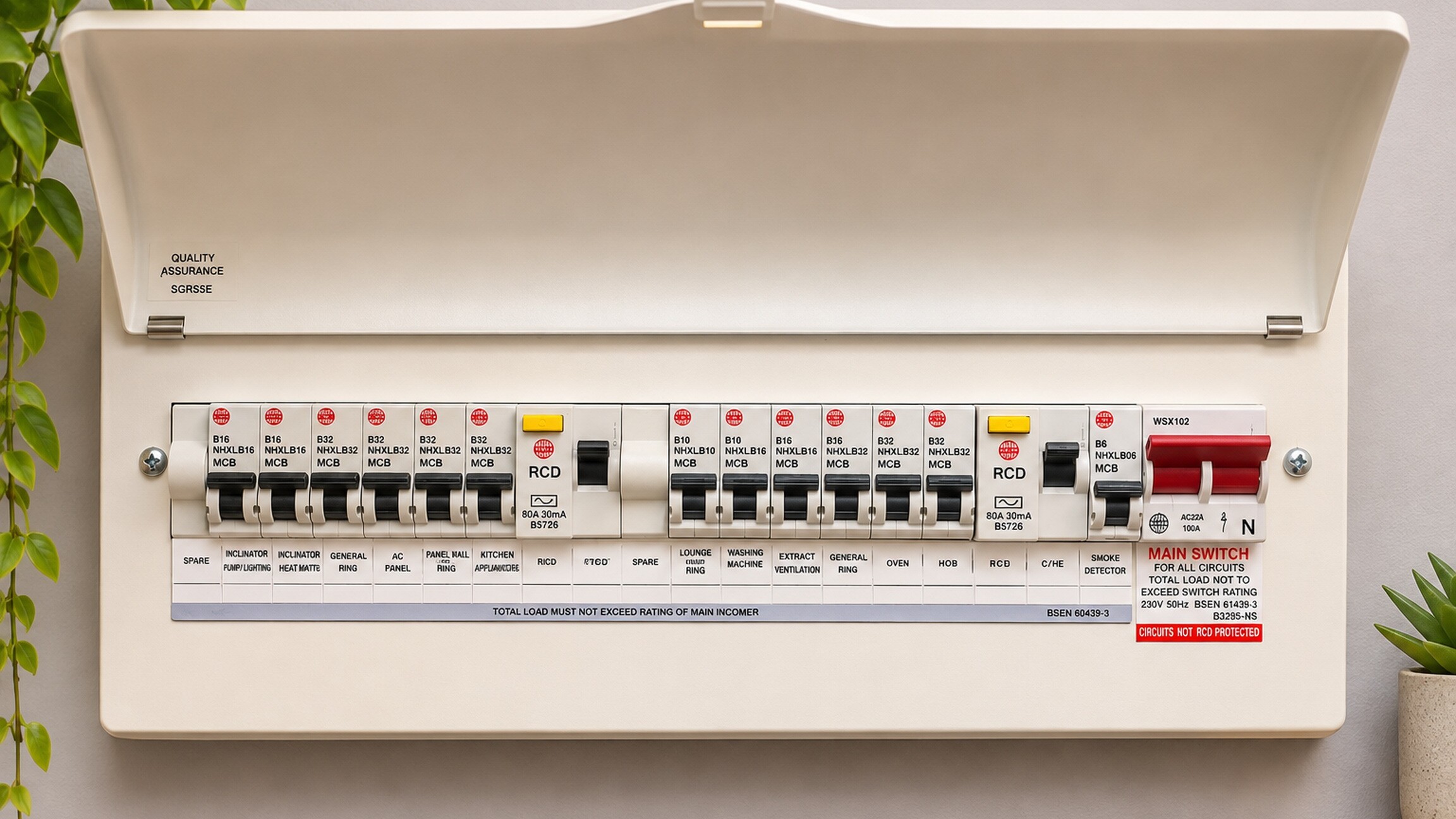
Modern consumer units contain protective devices designed to respond quickly when electrical faults occur. Depending on the design of your installation, this can provide protection against electric shock, overloads, short circuits, earth leakage and other electrical faults.
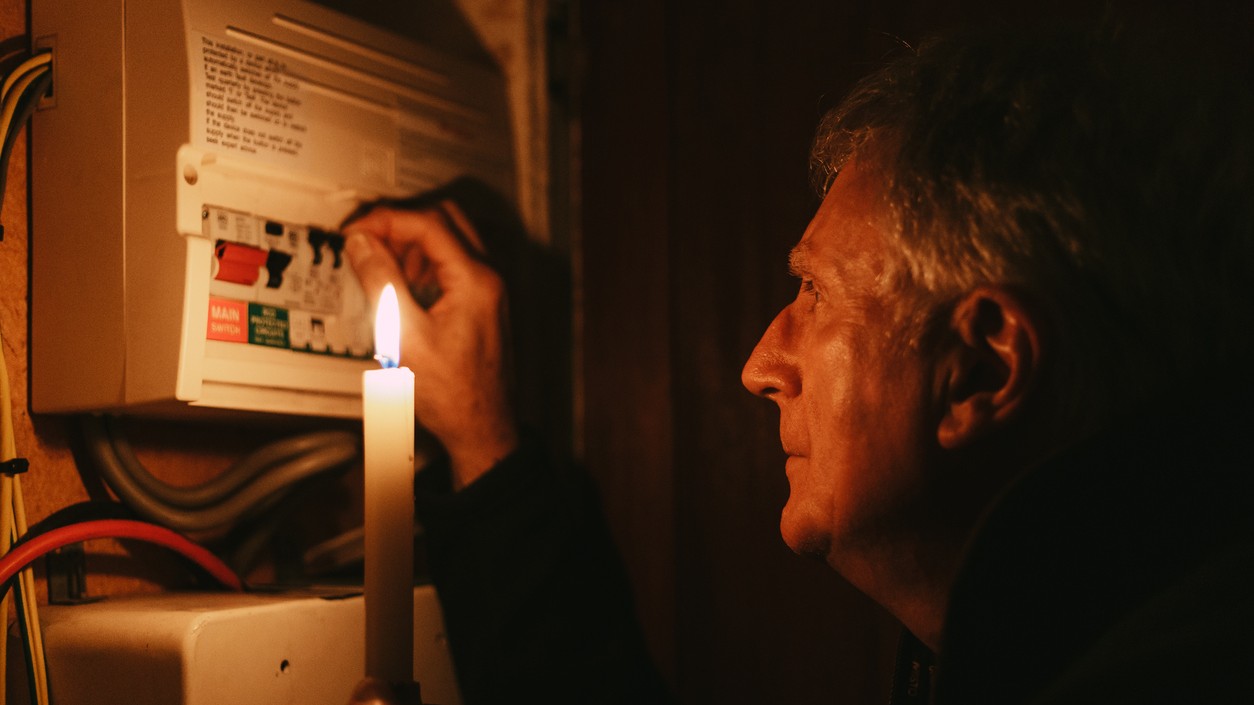
Older fuse boards may provide more limited protection, particularly where circuits aren’t protected by modern RCDs or individual RCBOs.
Replacing an ageing consumer unit gives us an opportunity to assess the installation, test the circuits and provide modern protection appropriate to your home.
⚠️ Signs your consumer unit is showing its age
🧯 An older-style fuse box with rewireable fuses
⚡ Little or no RCD protection
🔌 Circuits that regularly trip
🔥 Signs of overheating or discolouration
⚠️ Damage to the consumer unit or its enclosure
💥 Fuses that regularly blow
🔊 Buzzing or unusual noises
🏠 Electrics not inspected for years
🚫 Missing or unclear circuit labels
🛠️ Electrical alterations of unknown quality
📄 An EICR has identified issues
🧱 Plastic consumer unit enclosure
Replace an ageing or outdated fuse board
Many older properties still have fuse boards that were installed when household electrical demands were very different.
You might have traditional rewireable fuses, older circuit breakers or a consumer unit offering limited RCD protection. That doesn’t automatically mean the installation is dangerous, but it can mean your home doesn’t benefit from the level of protection available with a modern consumer unit.
We’ll assess what you already have, test the relevant parts of your installation and explain whether replacement is recommended without suggesting unnecessary work.
🛡️ What can a modern consumer unit offer?
⚡ Modern circuit protection
🛡️ Residual-current protection where required
🔌 Individual circuit protection with RCBOs
⚙️ Protection against overloads and short circuits
🌩️ Surge protection where required
🔥 Additional arc-fault protection where required
🏷️ Clear circuit identification and labelling
🏠 An installation better suited to a modern home
📄 Full inspection, testing and certification
🔧 Easier fault identification and maintenance
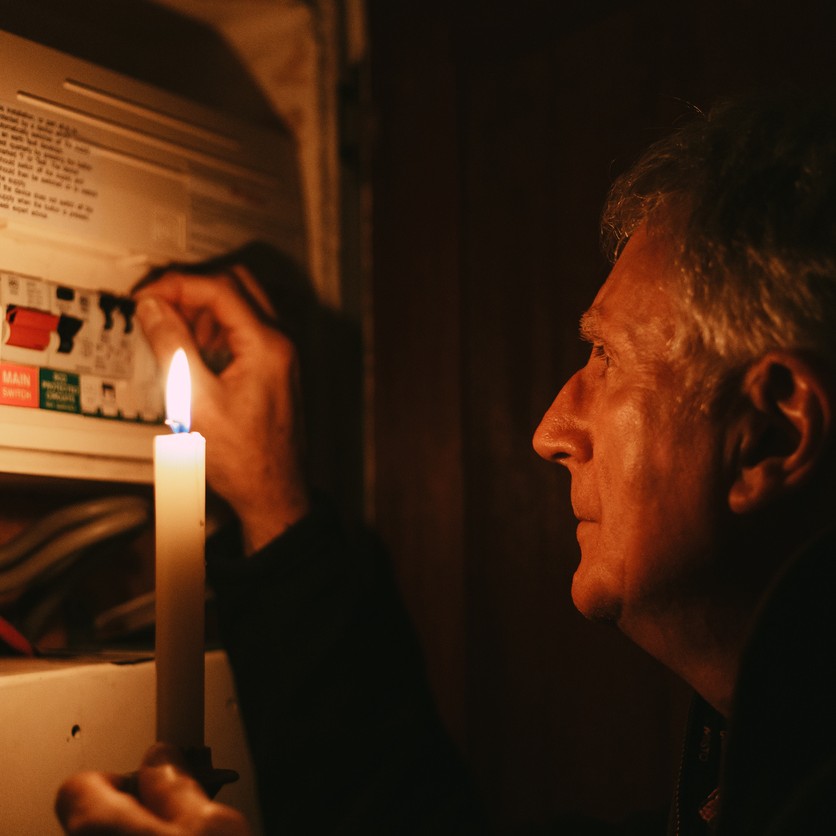

Modern electrical demands and home improvements
The amount of electrical equipment we use at home has changed dramatically. Kitchens contain more appliances, many people now work from home and properties increasingly include smart technology, outdoor electrics and dedicated electrical equipment. Renovations can also involve new circuits for extensions, kitchens, loft conversions and other improvements.
If you’re already making significant changes to your electrical installation, it’s sensible to establish whether your existing consumer unit provides suitable protection and has the capacity and configuration needed for the work you’re planning.
🏠 Supporting the way you live today
🍳 New kitchens and utility rooms
🏡 Extensions and loft conversions
💻 Home offices
🌿 Garden rooms and outbuildings
💡 New lighting circuits
🔌 Additional socket circuits
🚿 Bathroom electrical upgrades
🚗 EV charging
🌡️ Electric heating technologies
🔒 CCTV, alarms and security systems
🏠 Smart home technology
⚡ Dedicated circuits for larger electrical loads
Prepare your home for future technologies
Homes are becoming increasingly electric. EV chargers, solar panels, battery storage, heat pumps and smart technology can all introduce new requirements for your electrical installation.
That doesn’t mean every home needs everything replaced in anticipation of future technology. But if your consumer unit is already due for upgrading, it makes sense to consider what your electrical requirements might look like in the years ahead.
We’ll discuss your plans and help ensure the new installation is designed with both your current and likely future requirements in mind.
🌿 Getting ready for tomorrow
🚗 Prepare for EV charging
☀️ Support future solar installations
🔋 Prepare for battery storage
🌡️ Consider future electric heating requirements
🏠 Support smart home technology
🌿 Power garden rooms and outdoor spaces
💡 Support efficient modern lighting
⚡ Allow for future electrical circuits
📈 Invest in your electrical infrastructure
🔧 Make future alterations easier to accommodate

Ask yourself…
If you answer yes to one or more of these questions, it could be worth arranging a professional assessment of your consumer unit and electrical installation.
Does your fuse board still contain older-style or rewireable fuses?
Are you unsure whether your circuits have modern RCD protection?
Does your consumer unit look particularly old or show signs of previous alterations?
Do circuits trip regularly without an obvious reason?
Have you noticed signs of heat, damage or discolouration around your fuse board?
Has an EICR recommended improvements to your consumer unit or circuit protection?
Are you planning an extension, new kitchen, loft conversion or major renovation?
Are you considering an EV charger, solar panels, battery storage or other future technology?
Has it been many years since your electrical installation was professionally checked?
We’ll assess your existing consumer unit and electrical installation, explain what we find in plain English and recommend the solution that’s right for your home.
CONTACT LAIRD ELECTRICAL
Get in touch to discuss your electrical requirements today.
Which consumer unit is right for your home?
You don’t need to know which consumer unit or protective devices your home requires – that’s our job. The right solution depends on your existing electrical installation, the circuits within your property and how your home is used.
The comparison below explains two terms you’re likely to hear when discussing modern consumer units.
RCD/MCB protection
RCBO protection
Groups of circuits can share RCD protection, with individual MCBs protecting circuits against overloads and short circuits.
Each protected circuit has its own RCBO providing overcurrent and residual-current protection.
Depending on the arrangement, a fault can result in several circuits losing power together.
The affected circuit can be disconnected independently, helping other circuits remain operational.
Provides important electrical protection when correctly designed and installed.
Provides individual circuit protection and can make faults easier to isolate.
The installation design and requirements make this an appropriate solution.
You want individual protection across circuits as part of a modern consumer unit installation.
We’ll specify the appropriate consumer unit and protective devices after assessing your property rather than relying on a one-size-fits-all solution.
Our consumer unit upgrade services
Every property and electrical installation is different, which is why we tailor our consumer unit work to your individual requirements.
Whether you’re replacing an ageing fuse board or upgrading as part of a wider electrical project, we’ll recommend a solution appropriate to your home and installation.


Myth busting
There are plenty of misconceptions about consumer units and fuse boards. Here are some of the most common myths we hear — and the facts behind them.
Myth
Every old fuse board is dangerous and must be replaced immediately.
Fact
Not necessarily. Age alone doesn’t tell us the condition of an electrical installation. An older fuse board may lack features found in modern consumer units, but the right approach is to assess the installation properly and recommend improvements based on its condition and protection.
Myth
If my electrics work, my consumer unit must be fine.
Fact
An electrical installation can continue powering lights and sockets even when improvements are advisable. The purpose of many protective devices is to respond when faults occur, so everyday operation alone doesn’t tell you everything about the condition or protection of the installation.
Myth
Replacing the consumer unit fixes all the electrics in the house.
Fact
A consumer unit upgrade improves the equipment providing protection and distribution, but it doesn’t automatically replace or repair wiring, sockets, switches or other parts of the installation. Existing faults identified during testing may require separate remedial work.
Myth
A breaker that keeps tripping is just a nuisance.
Fact
A protective device that operates repeatedly is telling you something. There may be a faulty appliance, overloaded circuit or electrical fault that needs investigating. Repeatedly resetting the device without identifying the cause isn’t the answer.
Myth
The biggest consumer unit with the most circuits is always best.
Fact
A consumer unit should be designed around the electrical installation it serves. More isn’t automatically better. We’ll consider the existing circuits, appropriate protective devices and potential future requirements before recommending a suitable solution.
Myth
Changing a fuse board is simply a matter of swapping the old box for a new one.
Fact
A professional consumer unit upgrade involves considerably more than changing the enclosure. The existing installation needs to be assessed, the new equipment correctly specified and installed, and the completed work inspected and tested before the appropriate certification is issued.
Jargon buster: consumer units
No jargon. Just straightforward advice.
Electrical terminology can sound complicated, particularly when several different protective devices are mentioned. Here are some of the terms you may hear when discussing a consumer unit upgrade.
Consumer unit
Often called a fuse box or fuse board, the consumer unit is the main distribution point for your home’s electrical circuits. It contains protective devices that help protect the electrical installation and the people using it.
Fuse
A protective device designed to break an electrical circuit when excessive current flows. Traditional fuse boxes may contain replaceable or rewireable fuses.
MCB
MCB stands for Miniature Circuit Breaker. It protects an electrical circuit against excessive current caused by conditions such as overloads and short circuits.
RCD
RCD stands for Residual Current Device. It’s designed to quickly disconnect the electricity when certain types of earth leakage fault are detected, helping to reduce the risk of electric shock.
RCBO
An RCBO combines residual-current protection with overcurrent protection for an individual circuit. This means a fault on one RCBO-protected circuit can be isolated without necessarily disconnecting other circuits.
SPD
SPD stands for Surge Protection Device. It’s designed to protect the electrical installation and connected equipment against transient overvoltages.
AFDD
AFDD stands for Arc Fault Detection Device. It’s designed to detect certain types of electrical arcing and disconnect the affected circuit where appropriate.
Earthing
Earthing provides a safe path for fault current and is an essential part of an electrical installation’s protective measures.
Bonding
Protective bonding connects certain metal services to the electrical earthing system where required, helping to reduce potential differences in voltage during a fault.
Electrical Installation Certificate (EIC)
A certificate issued following qualifying new electrical installation work. It records details of the installation and confirms that the work has been inspected and tested.